Shire Horse vs Clydesdale Showdown: Draft Horse Guide
Draft horses have powered farms, pulled wagons, and captured hearts for centuries, but many forget to look closely at how breed traits influence daily handling. When comparing shire horse vs clydesdale, folks often zero in on size and color while overlooking how each breed’s build affects farm work and local climate adaptation. This can lead to mismatched expectations and surprises in care. How can you pick the draft horse that really fits your needs?
By digging into each breed’s history, build, and personality, you’ll gain clear insight to make a confident choice. Knowing how a Shire’s solid frame or a Clydesdale’s feathered legs respond to weather, chores, and training helps you avoid unexpected costs and stress. This knowledge ensures you start on the right foot, build a stronger bond, and keep your draft partner happy and healthy.
Overview: Shire vs. Clydesdale
| Feature | Shire Horse | Clydesdale |
|---|---|---|
| Origin | England (Midlands, especially Lincolnshire) | Scotland (Lanarkshire/Clyde Valley region) |
| Purpose | Farm work, pulling carts, brewery drays | Farm work, hauling, parades (Budweiser fame) |
| Temperament | Calm, gentle, patient | Friendly, energetic, willing |
| Height | 16.2 – 19.0 hands (avg. ~17.2 h) | 16.0 – 18.0 hands (avg. ~17.0 h) |
| Weight | 1,800 – 2,400 lb (816 – 1,089 kg) | 1,600 – 2,200 lb (725 – 998 kg) |
| Coat Colors | Mostly black, bay, brown, or grey | Bay with white markings; sometimes black or roan |
| Feathering | Thick, silky hair on lower legs | Abundant feathering, especially around fetlocks |
| Movement | Heavy, powerful, with straight action | More flashy and animated gaits |
| Lifespan | 20–25 years | 20–25 years |
| Registry Age | Since 1878 (UK Shire Horse Society) | Since 1877 (Clydesdale Horse Society, UK) |
Physical Differences
Build
- Shires are generally more massive and muscular, especially in the hindquarters.
- Clydesdales are typically more refined and elegant, with a slightly leaner frame and higher-set necks.
Color & Markings
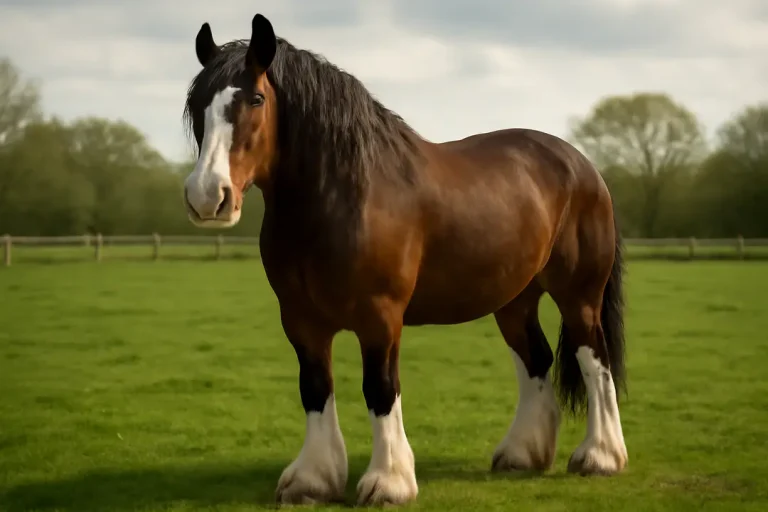
- Shires often come in solid black, brown, or bay, with limited white.
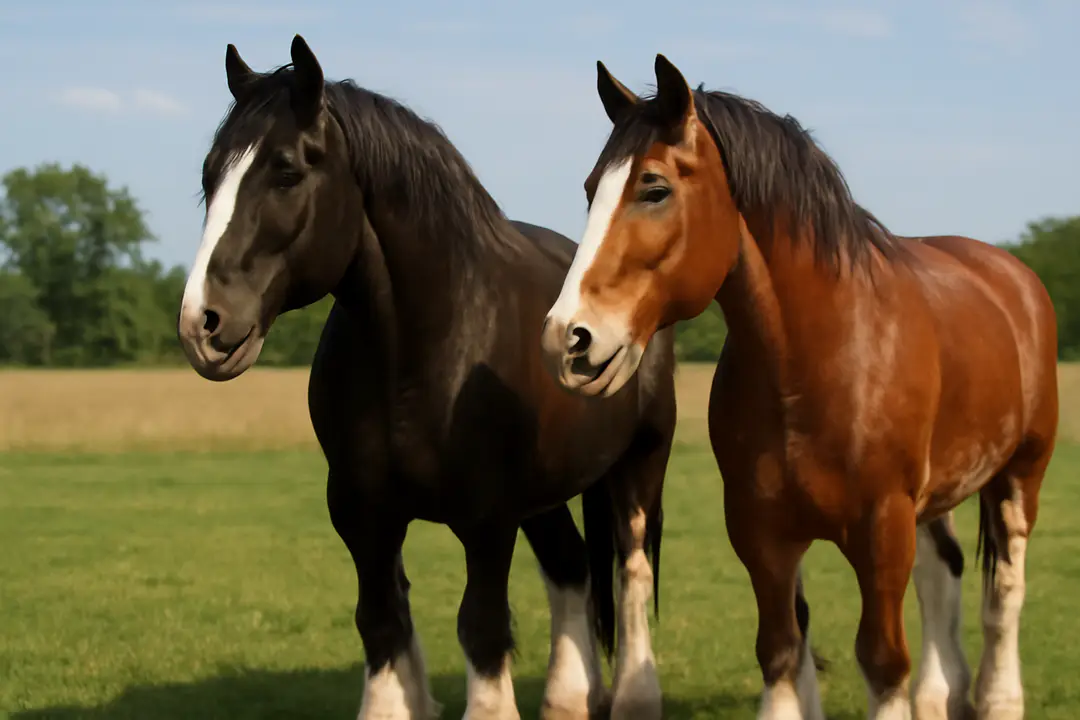
- Clydesdales are known for their bay coat with flashy white stockings, wide blazes, and facial markings.
Uses Today
| Use Case | Shire Horse | Clydesdale |
|---|---|---|
| Work | Logging, plowing, ceremonial driving | Parades, promotions, farmwork |
| Riding | Gaining popularity for trail riding | Ridden more often in shows |
| Shows & Parades | Frequently shown in-hand or harness | Star of the Budweiser hitch team |
| Breeding | Often crossed with other drafts | Popular in light draft crossbreeds |
Notable Traits
- Shire Horse:
Largest horse breed ever recorded (Sampson stood 21.25 hands). Known for quiet power and calm disposition. - Clydesdale:
Famous globally for their beauty and movement, especially through Budweiser’s iconic parade teams.
Which One Is Right for You?
| Preference | Choose a… |
|---|---|
| Heavier pulling power | Shire |
| Flashy looks for parades/shows | Clydesdale |
| Quieter, slower temperament | Shire |
| More refined and animated gait | Clydesdale |
| Rare breed preservation focus | Shire (more endangered) |
History and Origins
Shire horses trace their roots to medieval England. They served as war mounts and then as heavy farm partners. Over centuries, breeders refined their size and strength. You can explore a detailed heritage and care guide to learn more about their evolution.
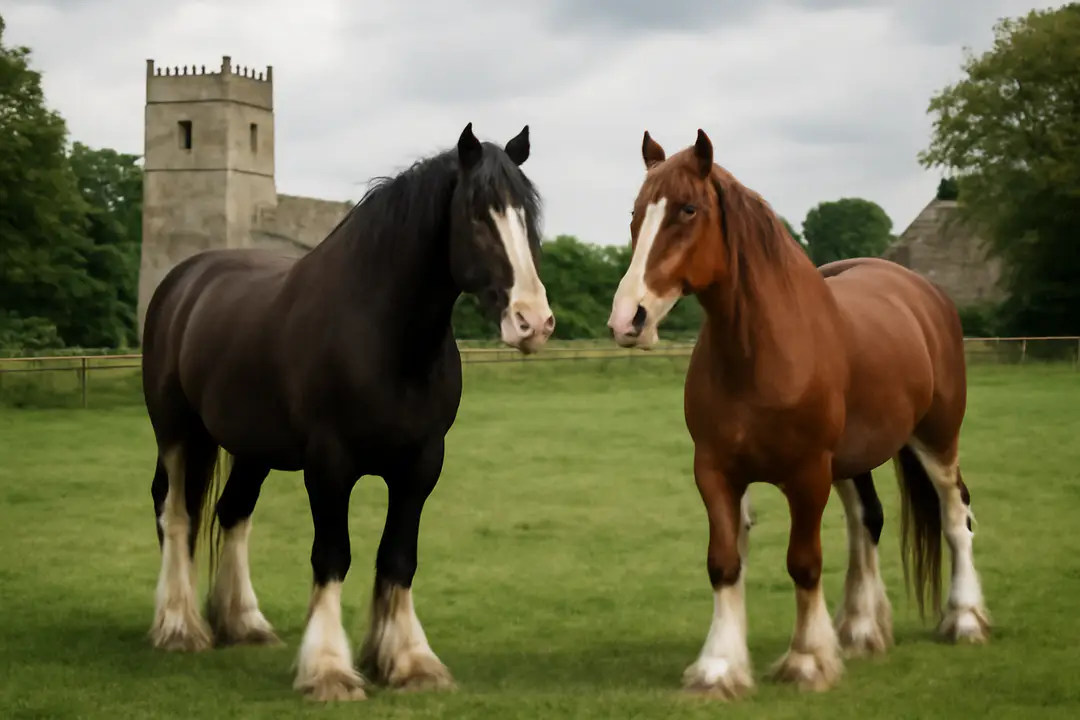
Clydesdales come from Scotland’s River Clyde valley in the 18th century. They started as coal haulers before finding fame in agriculture. Breeders prized their stamina over extreme weight. A smaller, active build made them ideal for quick farm work and road transport.
Both breeds grew popular across the British Isles and then North America. In time, Americans fell for a Shire’s calm power and a Clydesdale’s flashy feathering. Today, each draft horse carries a legacy of hard work, yet offers a unique flavor to modern stables.
Physical Traits Compared
At first glance, Shires and Clydesdales look alike. They share feathered legs, large hooves, and a heavy build. But subtle differences shape their strengths. Here’s a quick comparison:
| Trait | Shire | Clydesdale |
|---|---|---|
| Height | 16–18 hands | 16–17 hands |
| Weight | 1,800–2,400 lbs | 1,600–2,200 lbs |
| Feathering | Heavy, silky | Moderate, curly |
| Common Colors | Black, bay, grey | Bay with white blaze |
Shires tend to be taller and heavier, giving them more static power. Clydesdales are slightly leaner, offering a burst of speed and agility. Consider how these physical differences match your tasks and terrain.
Temperament and Behavior
Shire horses are known for calm, steady temperaments. They rarely spook and tend to accept slow, heavy work without fuss. This makes them ideal for new handlers or mixed-use farms. A steady gait and patient nature suit them to cart pulls or carriage rides.
Clydesdales often display more energy and curiosity. They can be playful and alert, which makes them stand out in shows or parades. However, they may need firmer training and consistent handling to focus on farm chores. With the right routine, their lively spirit becomes an asset.
In both breeds, early groundwork pays off. Spend time building trust through regular grooming and simple commands. Watch their reactions in busy environments. A Shire’s calm demeanor can soothe a nervous stable, while a Clydesdale’s alertness keeps your work engaging.
Tip: Use positive reinforcement and short, varied training sessions. This approach handles both breeds effectively and prevents boredom or resistance.
Care and Management
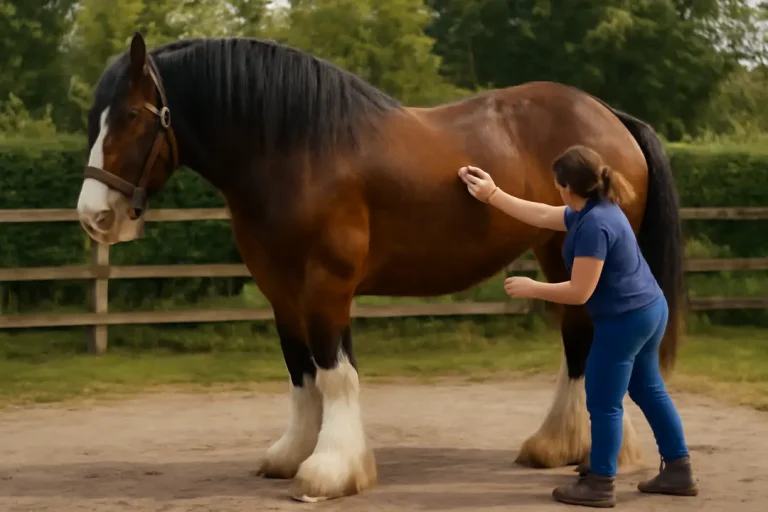
Maintaining heavy feathering requires daily attention. Brush out mud and debris to avoid skin issues. In winter, pack on extra bedding or use protective wraps. Monitor leg health, as thick feathers can hide cuts or mites.
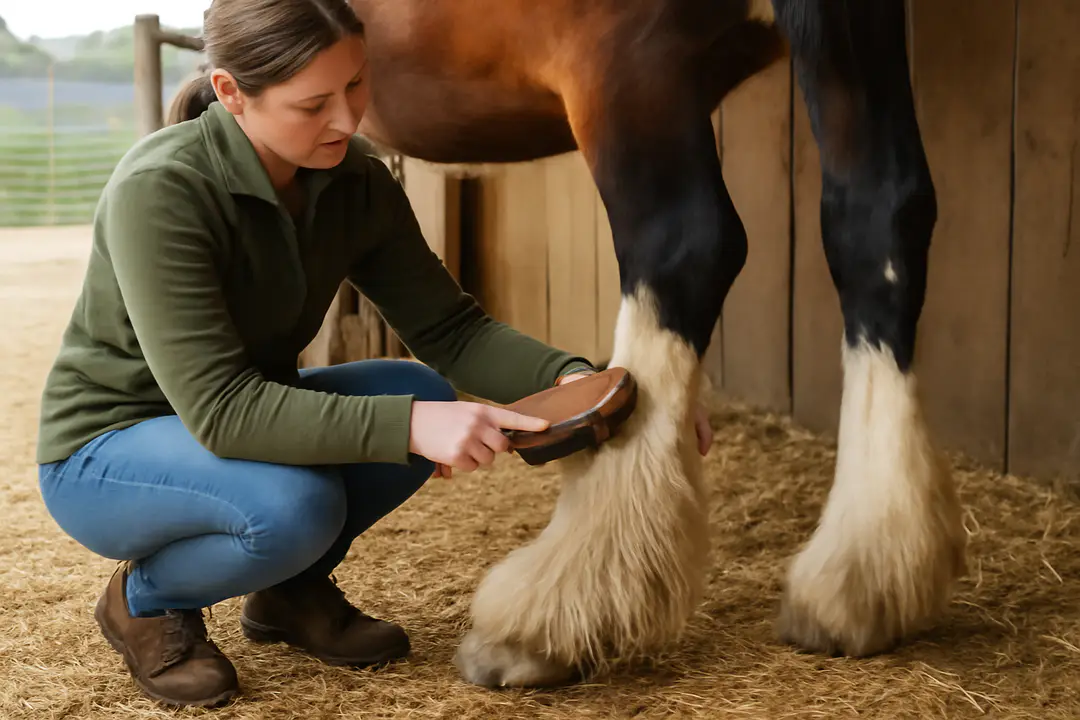
Hoof care is critical. These horses bear immense weight, so schedule farrier visits every 6–8 weeks. Trim and balance hooves to prevent lameness. Provide a mineral-rich diet to support hoof growth.
For grooming, a simple step-by-step grooming routine keeps feathers soft and skin healthy. Begin with a light curry, follow with a stiff brush, then finish with a damp cloth. Check for sores under feathered areas.
Daily turnout on firm, dry ground reduces joint stress. Give access to high-quality hay and a balanced grain mix. Track body condition; both breeds can gain weight quickly when idle.
Practical tip: Keep an eye on water intake during hot months. Their size makes them prone to dehydration. A heavy-duty trough in shade helps maintain proper hydration.
Working Roles Today
These draft breeds find diverse roles in modern life. On hobby farms, Shires handle plowing, hay wagons, and riding for larger riders. Their calm power suits them to gentle trail rides or carrying heavier riders over rough ground.
- Logging and forestry work
- Historical reenactments and shows
- Brewery promotions and parades
- Plowing and field preparation
Clydesdales often appear in parades, promotions, and competitive driving events. Their flashy white markings and step make them crowd favorites. They also serve on farms for lighter pulling tasks and carriage rides for tourists.
Both breeds work well in team hitch events. Pairing a Shire’s muscle with a Clydesdale’s flair brings visual appeal and balance. For small farms, even a single draft horse offers charm and steady performance.
Selecting the Right Draft
Your choice depends on workload, climate, and skill level. Ask yourself these questions before you buy:
- How heavy are the loads you need to move?
- What weather extremes do you face?
- Do you have experience handling large horses?
- What space and turnout can you provide?
- Is flashy appearance important or is calm power the priority?
Inspect potential horses for soundness. Check joints, feet, and back condition. Request a trial period to gauge behavior under your routine. Talk to breeders and owners about lineage and training history.
Ultimately, match breed traits to your daily life. A mellow Shire might ease you into draft work. An energetic Clydesdale can turn chores into a fun partnership. Weigh temperament, build, and budget to find your best match.
Costs and Ownership
Draft horses carry higher up-front and ongoing costs. Purchase prices range from $3,000 to $10,000, depending on training and pedigree. Expect to spend $150–$300 per month on feed, bedding, and routine care.
Farrier visits for heavy horses can cost $100–$200 each. Veterinary check-ups, vaccinations, and deworming add $100–$300 annually. Insurance for mortality or major medical might run $300–$500 per year.
Equipment matters. Invest in sturdy harnesses and carts rated for your horse’s weight. High-quality blankets and turnout sheets cost $100–$300 each. Factor in grooming tools for thick feathering.
Budget tip: Join draft horse associations for bulk feed discounts and group rates on farrier services. Share transport or training clinics with local draft owners to lower costs. A small network can save you hundreds each season.
Remember to plan for retirement. Even if your draft horse works lightly at pasture, vet costs rise with age. A savings fund or long-term care plan keeps your horse comfortable in later years.
Conclusion
Choosing between a Shire horse vs Clydesdale means balancing power, temperament, and daily needs. Shires offer unmatched calm strength, perfect for steady, heavy tasks. Clydesdales bring energy and flair, ideal for show events and lighter work. Both breeds thrive with proper grooming, farrier care, and mindful feeding.
By studying their history, comparing physical traits, and weighing ownership costs, you’ll make a confident choice. Practical experience with each breed before purchase pays dividends in happiness and performance. Remember to factor in your climate, workload, and handling skills.
Above all, draft horses reward dedication with loyal partnership and proud presence. Whether you choose a serene Shire or a spirited Clydesdale, you’re investing in centuries of tradition and unmatched horsepower. Let this guide help you find the draft companion that fits your farm, your schedule, and your heart.