Best Climate for Shire Horses Ideal Care Conditions
We all admire those towering shire horses striding through misty pastures. Their strength and calm presence steal the show, but few people stop to consider how the weather shapes their daily life. Many breeders focus on feed, training, or grooming and miss how temperature swings can sneak up on these gentle giants. So, what’s the ideal climate to keep shire horses comfortable and healthy?
The answer lies in balancing cozy warmth with fresh air and avoiding extremes that stress their massive bodies. By paying attention to temperature thresholds, humidity levels, and seasonal shifts, you can spot trouble before it starts. That insight helps you choose the right pasture, upgrade your shelter, and plan feeding schedules. In turn, your shire horse stays fit, content, and ready for work or leisure no matter the season.
Temperature Needs
Shire horses thrive when temperatures stay within a moderate range. They evolved in cool, wet climates, drawing resilience from their heritage roots.
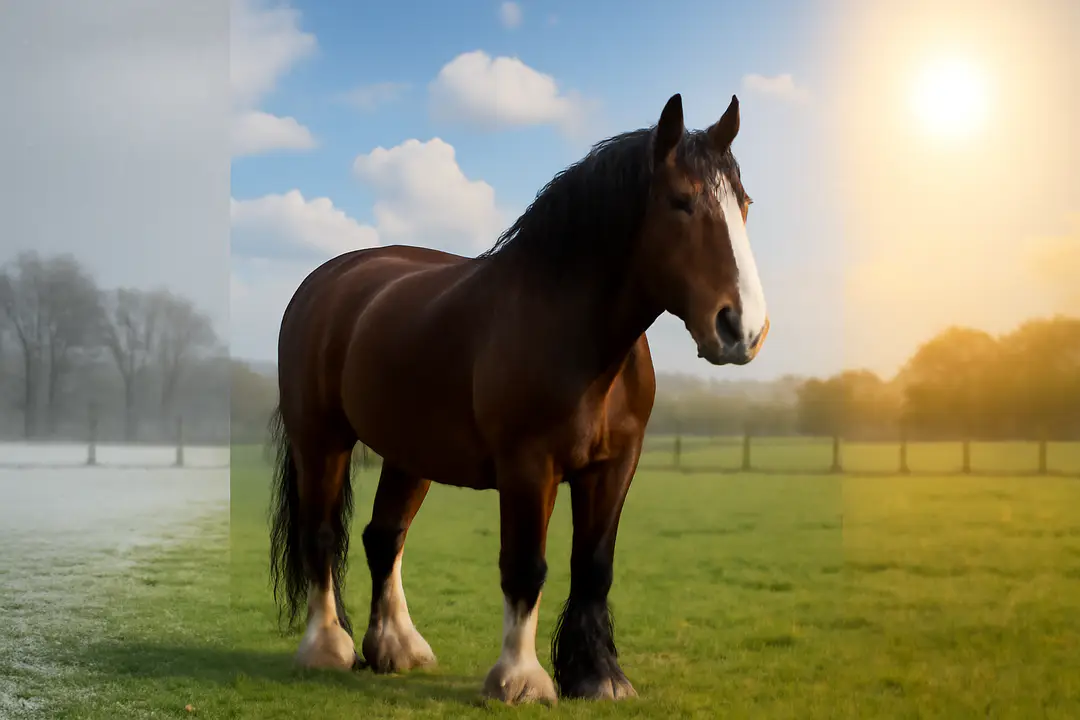
Here are the ideal daily temperatures:
- 5°C to 20°C (41°F–68°F): Comfort zone for grazing and light work
- -5°C to 5°C (23°F–41°F): Still safe with proper shelter and blankets
- 20°C to 25°C (68°F–77°F): Monitor for heat stress; provide shade and cool water
- Above 25°C (77°F): Limit heavy work; use fans and misting systems
Watch for signs like panting, loss of appetite, or lethargy when temps rise. In cooler weather, ensure your shire horse has dry bedding and blankets rated for heavy breeds. Tracking daily highs and lows helps you adjust turnout times and workload.
Humidity and Ventilation
High humidity can trap heat and encourage respiratory problems. Shire horses have large lung capacity, but moisture-filled air makes breathing harder. Aim for barn humidity around 50–60%. A simple hygrometer can alert you when levels climb too high.
Good airflow is key. Keep stable doors and windows open on opposite walls to create a gentle cross breeze. Roof vents and ridge openings pull hot, moist air up and out. Avoid fans blowing directly on a resting horse—use them to improve overall circulation.
When humidity spikes, add moisture-absorbing bedding like kiln-dried shavings. Clean stalls daily to cut down on mold and ammonia. If you spot nasal discharge or labored breathing, increase turnout in open areas and consult your vet promptly.
Seasonal Management
Shire horses need a season-by-season care plan to handle changing climates. Follow these steps:
- Winter prep: Fit a heavy blanket and check for drafts in the stable.
- Spring check: Inspect pastures for mud and parasites before turnout.
- Summer care: Offer shaded paddocks, fresh water, and salt blocks.
- Fall maintenance: Adjust feed to boost calories as growth slows.
- Year-round health: Rotate grazing areas to reduce hoof issues.
These care routines ensure your shire is neither too hot nor too cold. Regularly review your plan as weather patterns shift. A little prep saves big headaches down the road.
Shelter Setup
A well-designed shelter offers refuge from wind, rain, and sun. Aim for at least 12 by 12 feet of stall per horse. That gives your shire room to turn around and lie down comfortably.
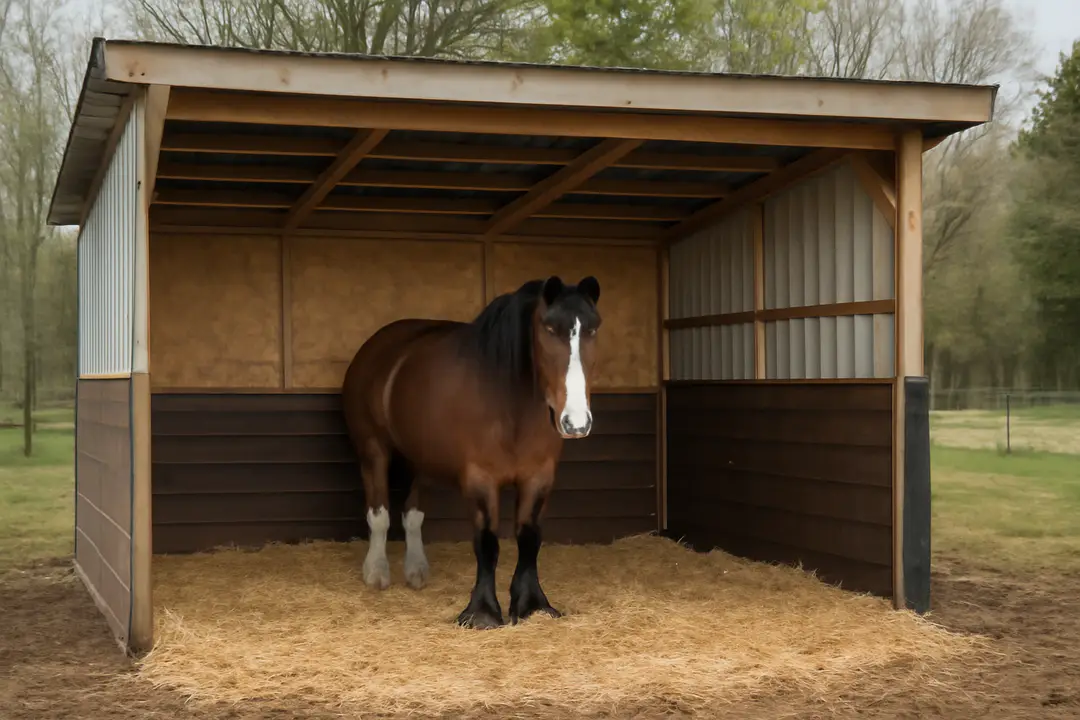
Insulate walls enough to reduce drafts but avoid trapping moisture. Solid lower panels block wind, while open upper areas or mesh sections let in fresh air. Position the entrance away from prevailing winds.
In hot months, add sliding doors or removable panels for extra breeze. In cold snaps, use windbreak tarps on one side. Always provide a deep layer of dry bedding to keep feet warm and joints comfy.
Regional Climate Comparison
Shire horses are versatile, but climates vary worldwide. Here’s a quick look at three common regions:
| Region | Avg Temp | Humidity | Notes |
|---|---|---|---|
| United Kingdom | 5°C–18°C | 70%–80% | Consistent damp; focus on dry bedding |
| U.S. Midwest | -10°C–30°C | 50%–70% | Wide swings; need both fans and heaters |
| Continental Europe | -5°C–25°C | 60%–75% | Cold winters, hot summers; plan shade and warmth |
Adjust your barn and turnout schedules based on local weather patterns. Even small tweaks can prevent heat stress or frostbite.
Health and Nutrition
Climate directly affects how much your shire horse eats and drinks. They burn more calories in cold, so increase high-fiber feeds during winter.
Offer at least 20 liters of clean water daily. In summer, add electrolytes to replenish what’s lost in sweat. Frozen waterers call for heated buckets or tank de-icers.
Seasonal coat changes can hide skin issues. Follow gentle grooming routines to spot sores or rain rot early. A glossy coat and strong hooves reflect good climate management.
Keep an eye on weight and body condition. Use a scale or weight tape each season. If your shire grows too thin or too heavy, tweak the ration and turnout to strike the right balance.
Conclusion
Creating the best climate for shire horses means paying attention to temperature, humidity, and seasonal shifts. With a clear plan for shelter, ventilation, and feeding, you can prevent stress and health issues. Monitoring local weather and adjusting turnout times keeps your horse active without overexertion. Simple steps like adding fans in summer, extra bedding in winter, and routine pasture rotation go a long way. By understanding these essentials, you’ll support your shire’s strength, comfort, and longevity. Start small—track your barn’s conditions this week—and build from there. Your shire horse will thank you with better health and a happier disposition.