How much can a shire horse pull: Draft Power Facts
There’s something almost magical about seeing a Shire horse stride out to its collar, ready to take on a heavy load. These gentle giants have powered farms and pulled carts for centuries, yet few people pause to consider the specific limit of their pulling strength. We often talk about their size or calm nature, but rarely about exactly how much weight they can move. So, how much can a Shire horse pull before you risk overworking it?
In short, understanding a Shire’s true pulling capacity keeps your work efficient and your horse healthy. Knowing that they can haul heavy loads on wheels versus dragging weights on rough ground helps you plan tasks, choose proper equipment, and avoid strain injuries. A clear grasp of pulling limits lets you match the task to the horse’s abilities, saving time and ensuring no one ends the day sore or stalling out early.
Power and Muscle Anatomy
Shire horses stand out for massive hindquarters and well‐developed shoulders. Broad hips and thick muscles give them natural leverage to handle heavy drafts. Their skeletal structure—strong spine, wide chest—supports harnesses without digging in. This anatomy distributes load evenly, reducing pressure points. It’s why they can keep steady pace under strain.
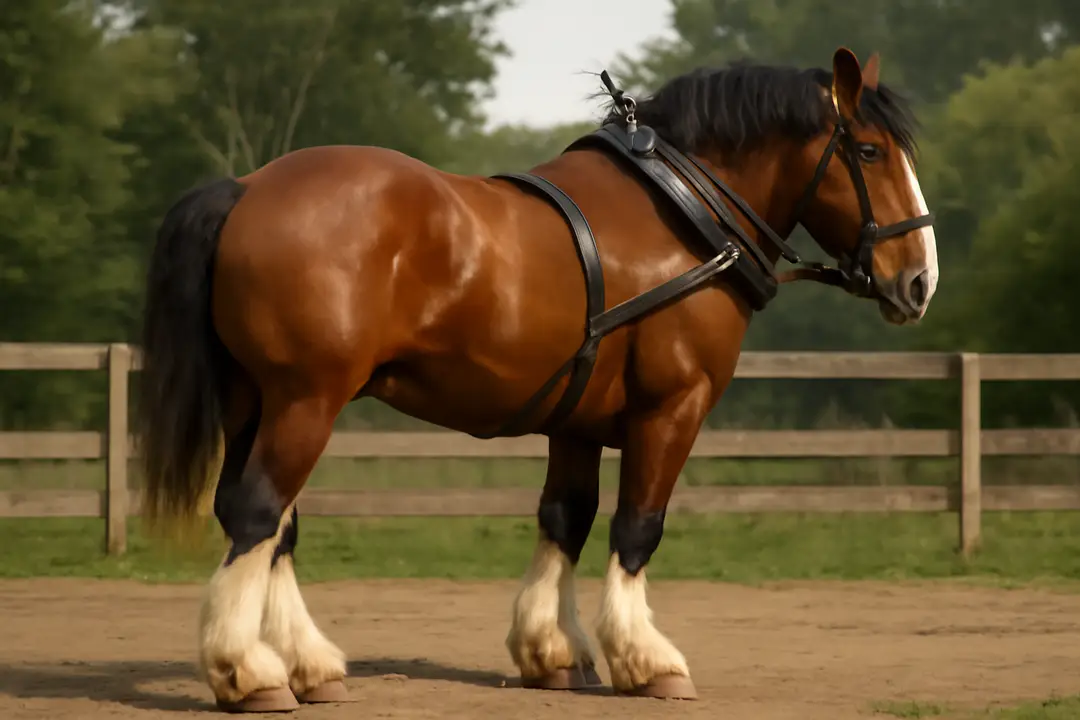
Practical tip: watch for muscle fatigue around the loin and gaskins. If you see swelling or knots, lighten the load and give rest. Proper conditioning builds endurance. Regular hill work and gradual weight increases let your horse adapt. A comfortable, well‐fitted collar helps them engage chest muscles fully.
You can learn more about the breed’s typical breed’s weight range to size your harness gear correctly. Younger or lighter Shires at the lower end of that scale will handle less than older, heavier individuals nearing 2,400 pounds. Tune exercises to your horse’s build, and always adjust gradually.
Historical Pull Records
Stories of draft horses moving extraordinary weights have fascinated farmers for ages. In 1842, Sampson set a record by pulling an enormous cart loaded with over 25 tons, showcasing strength few believed possible. Many of these feats happened on smooth tracks or factory yards, where wheels reduced friction. On rough terrain, those same horses would manage far smaller loads.
Tip: when you hear legends, ask about conditions. Flat, greased tracks versus muddy fields make a huge difference. Historical pulls often used rollers or iron wheels to help. Modern trials follow similar setups. Still, they remind us of what’s achievable with proper harnessing and footing.
Linking past to present, Sampson’s story shows how training and gear design have evolved. To push boundaries safely, use tested harness collars, strong traces, and allow rest periods between long hauls. Over time, your horse’s form and stamina will improve, letting you approach those classic performance marks without risking injury. You can read about Sampson, the legendary Shire, to get inspired by real examples.
Average Capacity Range
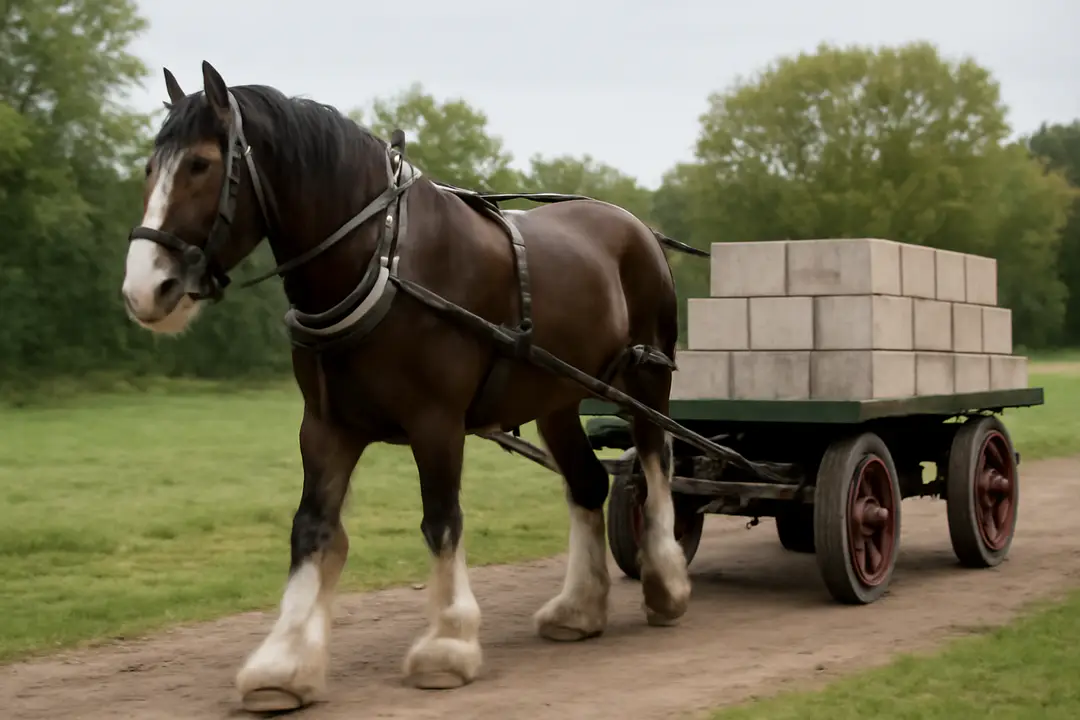
Most Shire horses can pull between 1.2 and 1.5 times their own body weight. For a 2,000‐pound horse, that’s 2,400–3,000 pounds on a wheeled cart. When dragging a sled over grass or snow, expect around 1.1 times body weight—2,200 pounds for a similar frame. Exact numbers vary by fitness, footing, and harness quality.
- 2,000 lb Shire on wheels: 2,400 – 3,000 lb
- 2,000 lb Shire dragging: 2,000 – 2,200 lb
- Young/untrained Shire: 1.0 – 1.2 times body weight
- Well‐trained Shire: 1.4 – 1.6 times body weight
Practical tip: attach a scale to your harness traces to check actual pull force. Monitor the horse’s breathing and gait. If footsteps shorten or breathing turns labored, drop the weight by about 10 percent.
To improve capacity, build stamina through interval pulling. Start under light loads, then gradually add weight as your horse proves comfortable. Rest between bouts, keep a slow steady pace, and always finish on a positive note to maintain motivation. Recording each session’s weight and distance helps you track progress accurately.
Farm and Field Uses
Shires shine in agriculture, from plowing to log hauling. Plows today often weigh 250–400 pounds. A single Shire can manage three‐furrow plows if well‐trained. Drag harrows and seed drills add modest weight but benefit from constant, steady pull.
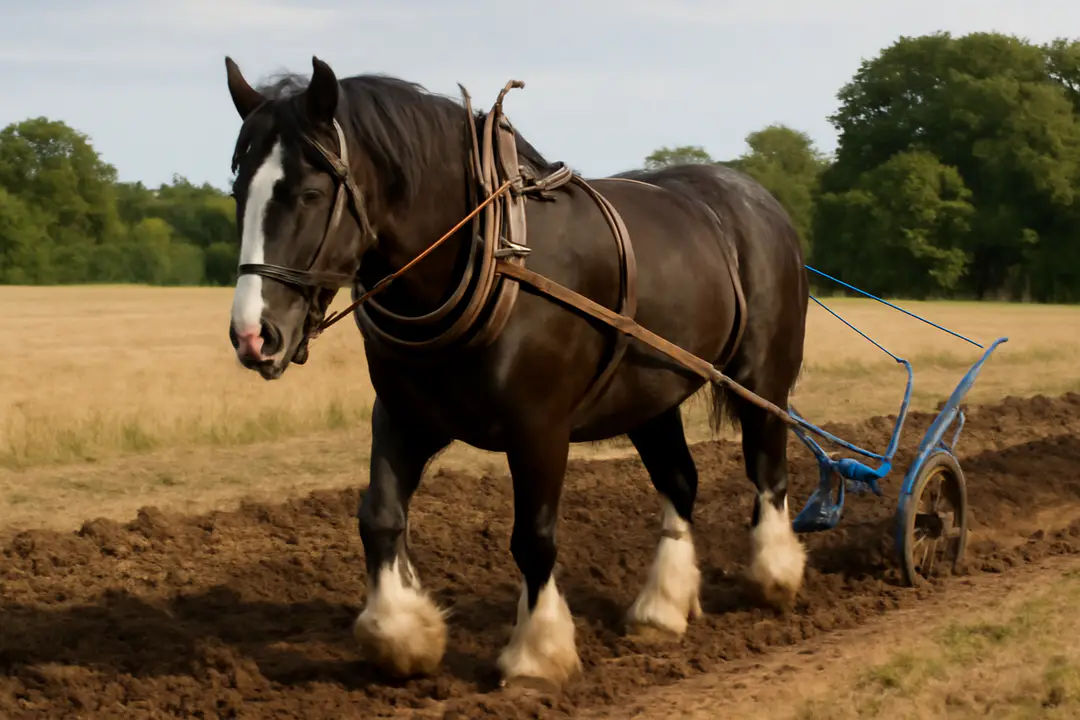
Tip: for uneven ground, use wider shoes to prevent slips. Keep traces at right length—too short and shoulders get pinched, too long and legs catch. Adjust harness snugly but leave room for a two‐finger gap beneath straps.
Their calm nature lets them handle tasks day after day. Rotate between heavy and light jobs to rest muscle groups. Include cart work on smooth lanes after plowing days. This mix of tasks strengthens overall fitness and prevents overuse injuries.
For small farms, pairing two Shires on a single plow can push 800 pounds or more comfortably. Monitor progress and maintain equipment. Healthy hooves, weekly hoof oiling, and twice‐daily checks keep your team ready. This practical approach ensures you’re never stuck in the field, waiting for replacement gear or extra hands.
Comparing with Other Drafts
Shire horses often stand alongside Clydesdales, Percherons, and Belgian drafts. While each excels, their pulling profiles differ. Look at this quick comparison for wheeled cart pulls:
| Breed | Avg Weight | Wheel Pull | Drag Pull |
|---|---|---|---|
| Shire | 2,000 lb | 2,400–3,000 lb | 2,000–2,200 lb |
| Clydesdale | 1,800 lb | 2,000–2,400 lb | 1,800–2,000 lb |
| Percheron | 1,900 lb | 2,200–2,600 lb | 1,900–2,100 lb |
| Belgian | 1,850 lb | 2,200–2,700 lb | 1,850–2,100 lb |
For more insight, see how Shires stack up in a comparison with Clydesdales. Each breed has strong points—Shires bring extra muscle mass, while Percherons often win on endurance.
Tip: choose breeds based on job type. For long steady hauls, Percherons may hold pace. For sheer heavy starts, reach for a Shire. Mixing teams can also balance strengths—pairing a Shire’s power with a Clydesdale’s agility offers a versatile combo.
Maintaining Peak Strength
A Shire’s pulling power depends on consistent care. Feed quality hay and balanced grains. Supplements like magnesium and potassium aid muscle function. Fresh water at every break prevents cramps.
Regular vet checks catch joint issues early. Keep shoes in good shape; ill‐fitting shoes cause strain and uneven gait. Massage and light stretching before work relax muscles. After heavy pulling, offer a cool‐down walk and light grooming.
Tip: track pull sessions in a journal with weight, distance, and recovery notes. Watch for signs of fatigue, like head tossing or uneven stride. Adjust the next session’s load based on recovery speed. This record helps avoid overwork and builds strength safely.
Proper rest cycles are as important as training. After two heavy days, schedule a lighter day or complete rest. Doing so keeps muscles fresh and reduces injury risk. Over weeks, you’ll see steady gains in how much your Shire can confidently move.
Conclusion
Understanding exactly how much a Shire horse can pull makes all the difference between a productive workday and an overtaxed animal. From their muscle structure to historical feats and modern field tips, you’re now equipped to gauge and safely increase your horse’s draft capacity. Remember that terrain, harness fit, training level, and rest cycles all play key roles. Pairing smart planning with gradual conditioning ensures your Shire stays healthy and motivated.
Whether you’re working a small farm or testing limits in shows, matching tasks to your horse’s true strength prevents injuries and boosts performance. Use rest days strategically, monitor lifting records, and employ the right gear. By following these practical insights, you’ll see your gentle giant take on heavier loads with confidence—making every turnout a success.