Complete Shire Horse Breed Guide: History, Care & Tips
Shire horses have played a vital role on farms and in ceremonies for centuries, known for their strength and gentle nature. Yet many enthusiasts overlook how crucial leg and feather care truly is for these giants. Ignoring this can lead to skin problems and discomfort. How can skipping proper grooming of their feathers affect a Shire horse’s health?
By understanding leg and feather maintenance, you’ll help your Shire stay healthy, sound, and comfortable. Learning simple care routines prevents infections and keeps these majestic animals at their best. With the right knowledge, you’ll avoid surprises and enjoy a stronger bond with your gentle giant.
Origins and History
The Shire horse breed traces back to medieval England, where they were valued for heavy farm work and hauling. Their ancestors likely included great Flemish war horses. Over time, breeders focused on size and temperament to meet growing agricultural needs. Some farm records from the 16th century emphasize their calm nature under stress.

By the 18th century, selective breeding refined traits like height and strength. Shires impressed show crowds and pulled barges along England’s canals. For those curious about deep history, you can explore detailed notes on the breed’s heritage. Understanding origins helps owners appreciate why these horses flourish in certain climates and settings.
Tip: When exploring Shire history, compare bloodlines and performance records. This insight guides breeding choices and care plans.
Physical Size and Build
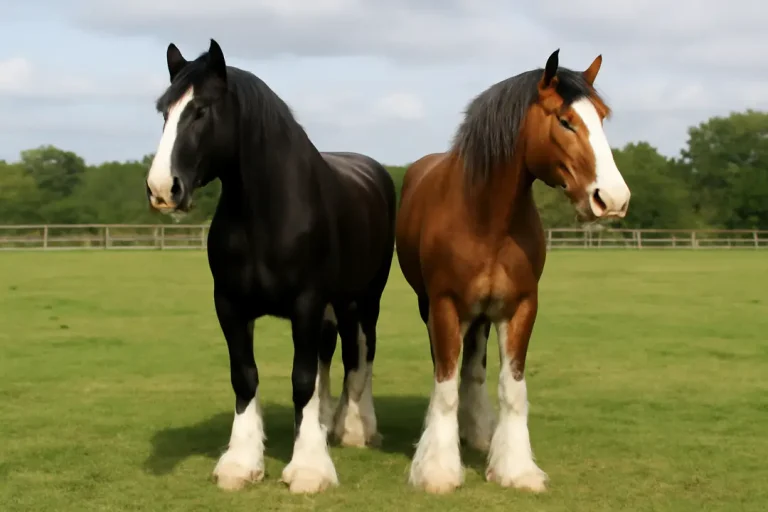
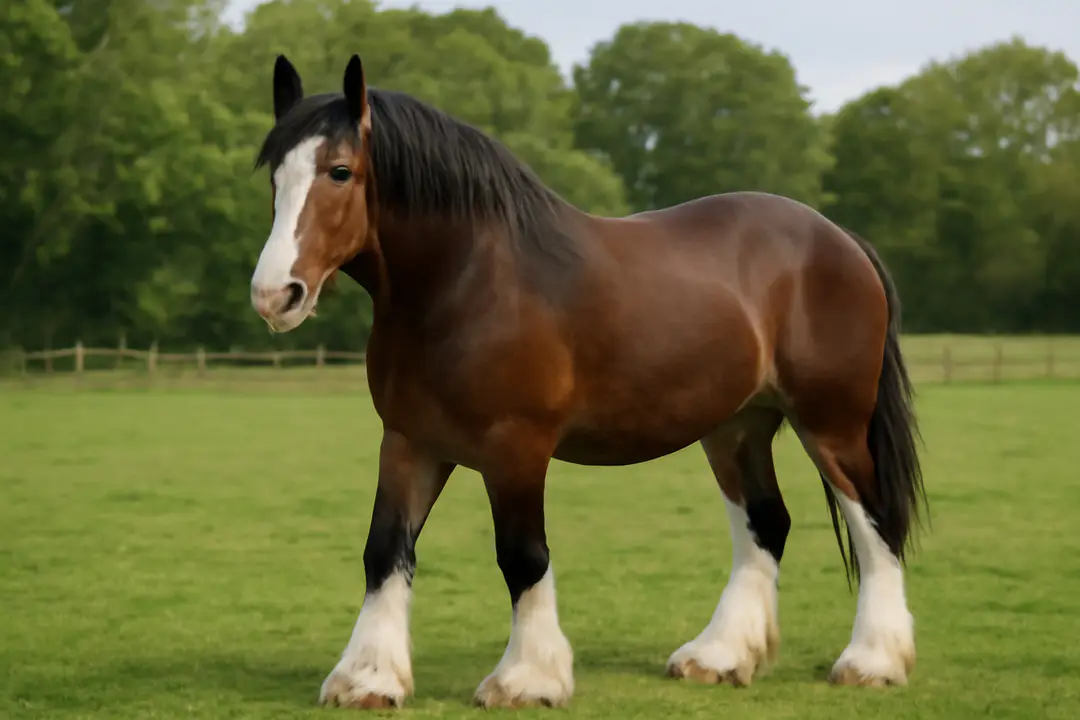
Shire horses are among the tallest and heaviest horse breeds. Adult males often stand between 17 and 18 hands (68–72 inches). Females can reach 16 to 17 hands. Their weight ranges from 1,800 to 2,400 pounds, thanks to broad chests and muscular hindquarters.
| Type | Height | Weight |
|---|---|---|
| Stallion | 17–18 hands | 1,900–2,400 lbs |
| Mare | 16–17 hands | 1,800–2,200 lbs |
| Gelding | 16.2–17.5 hands | 1,800–2,300 lbs |
Comparing these figures with similar draft breeds gives insight into specific needs. For example, a side-by-side look at Shire horse and Clydesdale shows that Shires often carry more weight but stand a bit taller. Practical tip: Measure hoof wear and shoe size regularly. A correct shoe fit supports their heavy build and prevents strain.
Temperament and Traits
Shire horses are known for being calm, patient, and gentle—even around children or in crowded events. They adapt well to new handlers and environments. This steady nature makes them popular in parades and therapy settings. At the same time, they respond reliably to firm, consistent training.
Their intelligence shows in quick learning of driving or harness routines. When you combine that with low-spook tendencies, you get a horse that remains composed under stress. Breed characteristics often include a curious but respectful outlook. Owners value these traits for safety and reliability.
Practical tip: Use positive reinforcement and clear signals. Their height means subtle cues carry across large frames. Learn more about key behaviors at detailed trait guides. By aligning training with natural tendencies, you’ll build trust faster.
Care and Grooming
Proper grooming is vital, especially for their heavy feathering on lower legs. Clean legs daily to prevent mud buildup. Check for ticks, stones, or skin irritation. Use a soft brush on the coat and a stiff brush on the feathers.

- Inspect feathers for cuts or sores;
- Wash once a week with gentle shampoo;
- Dry feathers thoroughly to avoid fungus;
- Trim excess feather hair if muddy.
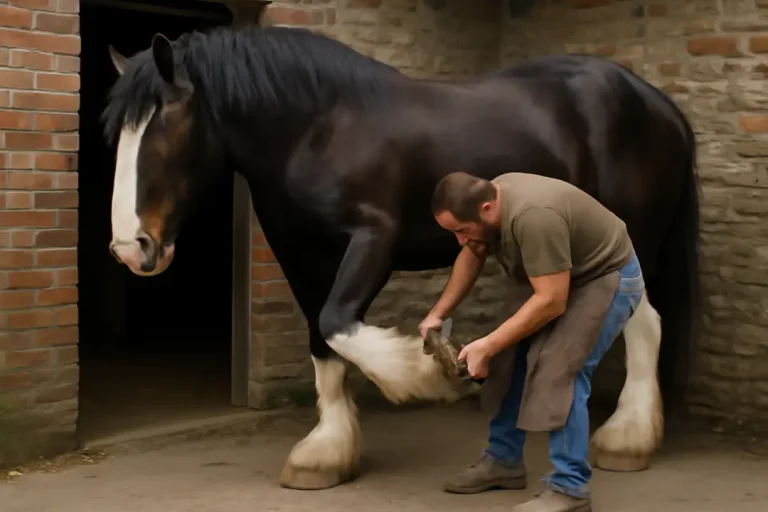
Don’t skip hoof care. A farrier visit every 6–8 weeks keeps shoes snug. Moisturize skin beneath feathers if it becomes dry. Keeping a grooming log helps track any recurring issues. Small daily steps protect your Shire’s comfort and health.
Feeding and Nutrition
Shires require a balanced diet to support their large frames without creating excess weight. High-quality grass hay and pasture form the core. Add a senior or draft-specific feed to maintain muscle tone. Avoid high-sugar grains, which can lead to laminitis.
- Morning: 2–3 lbs of draft mix feed;
- Midday: Access to quality hay or pasture;
- Evening: Supplement with a vitamin-mineral pellet;
- Water: Unlimited fresh supply;
- Salt block: Always available.
Monitor body condition monthly. A bit of extra weight can strain joints. For growth, young Shire foals need small, frequent meals. Older horses benefit from digestive supplements. Remember, every horse is unique—adjust based on workload and metabolism.
Training and Uses
Shires excel at driving, farm work, and open shows. Their calm strength makes them ideal for pulling carts or plows. Start groundwork early, focusing on ground manners. Use light harness sessions before moving to heavier loads.
- Week 1–2: Halter walk and stand;
- Week 3–4: Ground driving with light cart;
- Month 2: Increase harness weight gradually;
- Ongoing: Regular rest and muscle care.
Pair consistent training with positive rewards. This will reinforce good behavior. As they mature, you can introduce parade routines or competitive pulling. A well-trained Shire is versatile—ideal for both hobby farms and public displays.
Conclusion
The Shire horse breed offers a unique mix of power, calm, and history. From medieval farm fields to today’s show rings, this gentle giant has proven its worth. By respecting their origins, understanding their build, and caring for their feathers and diet, you set your horse up for success.
Practical grooming and balanced feeding prevent common issues. Training rooted in trust brings out their best traits. Whether you aim to drive a carriage, pull a plow, or simply enjoy their company, a well-prepared owner makes all the difference. Embrace these tips and watch your Shire thrive—ready to inspire admiration with every step.