Scottish Horse Names: A Guide to Unique and Traditional Selections
Scottish horse names are not just for identification; they often carry meanings that reflect history and culture. Choosing a Scottish name for a horse can connect the animal to its heritage and enhance the bond between owner and steed. From names inspired by historical figures to those that reflect the stunning landscapes of Scotland, the options are rich and varied.
Many people may wonder how to find the right name for their horse. There are naming traditions rooted in the past that can guide this process, ensuring that each name reflects the horse’s personality and the owner’s preferences. Some names signify strength or grace, while others evoke the beauty of the Scottish countryside.
Exploring popular Scottish horse names can spark creativity and help horse owners make an informed choice. The culture and language of Scotland offer a plethora of unique and meaningful options that can elevate any horse’s identity.
Scottish Horse Names
Here’s a list of Scottish horse names, inspired by Scottish culture, mythology, nature, and history:
1. Traditional Scottish Names
- Ailsa – From the rocky island, Ailsa Craig
- Angus – Strength
- Bonnie – Beautiful
- Callum – Dove
- Catriona – Pure
- Dougal – Dark stranger
- Eilidh – Light
- Fergus – Man of strength
- Fiona – Fair or white
- Lachlan – Warrior from the land of lakes
- Isla – Island
- Moira – Bitter or beloved
- Niall – Champion
- Ross – Headland
- Skye – Isle of Skye
- Alistair – Defender of the people
- Seona – God is gracious
- Tavish – Twin
- Sorcha – Bright or radiant
- Mhairi – Scottish form of Mary
2. Nature-Inspired Scottish Names
- Heather – Native plant of Scotland
- Rowan – Red tree
- Thistle – National flower of Scotland
- Glen – Valley
- Loch – Lake
- Bramble – Wild shrub
- Cairn – Rocky hill or memorial
- Moors – Open Scottish highlands
- Alba – White or Scotland in Gaelic
- Firth – Estuary
- Torran – Rocky hills
- Blaire – Field or plain
- Morven – Big hill
- Fern – Plant name
- Tay – River Tay
- Clyde – River Clyde
- Eorsa – Name of an uninhabited Scottish isle
- Lomond – Ben Lomond mountain
- Seileach – Willow tree
- Lorna – Fox
3. Mythological and Legendary Names
- Kelpie – Shape-shifting water spirit horse
- Selkie – Seal folk from Scottish mythology
- Nessie – The Loch Ness monster
- Bran – Legendary Irish-Scottish hound
- Cailleach – Old hag of winter
- Fionnlagh – Fair warrior
- Ossian – Legendary Gaelic poet
- Morag – Phantom of Loch Morar
- Angus Og – Celtic god of youth and love
- Cailean – Young warrior
- Epona – Celtic horse goddess
- Sluagh – Spirits of the restless dead
- Breacan – Plaid or tartan
- MacBeth – From Shakespeare’s famous play
- Nechtan – Mythical figure associated with water
- Donn – Lord of the dead
- Fearghus – Mythical Gaelic hero
- Luath – Legendary hunting dog
- Niamh – Goddess of beauty and brightness
- Lugh – God of craftsmanship and skill
Check out Shire Horse Names: Unique Choices for Your Majestic Steed.
4. Gaelic-Inspired Names
- Aodh – Fire
- Breagha – Beautiful
- Cairbre – Charioteer
- Ceilidh – A gathering or party
- Daithí – Swift
- Eoin – John in Gaelic
- Farlan – Son of the furrows
- Gillean – Servant or lad
- Maol – Bald or shaven
- Nevis – Named after Ben Nevis, the tallest peak
- Ruadh – Red
- Sionnach – Fox
- Taran – Thunder
- Torin – Chief
- Cian – Ancient
- Lìos – Meadow
- Fionn – Fair
- Seumas – James in Gaelic
- Connell – Strong wolf
- Muir – Sea
5. Famous Scottish Place Names
- Edinburgh – Capital city
- Stirling – Historic city
- Aberdeen – Northern city
- Dundee – Coastal city
- Orkney – Group of islands
- Mull – Isle of Mull
- Arran – Isle of Arran
- Lewis – Isle of Lewis
- Shetland – Shetland Islands
- Islay – Whisky island
- Glencoe – Famous valley
- Moray – Coastal region
- Trossachs – Woodland and glens
- Cairngorm – National park
- Iona – Historic religious isle
- Jura – Island known for whisky
- Oban – Coastal town
- Barra – Isle of Barra
- Skara – Short for Skara Brae
- Hebrides – The Western Isles

6. Names Inspired by Scottish Clans
- MacDonald
- Campbell
- Fraser
- Stewart
- MacGregor
- MacKenzie
- MacLeod
- Sinclair
- Douglas
- Grant
- Bruce
- MacLaren
- MacIntyre
- Gordon
- MacPherson
- Robertson
- MacDuff
- Buchanan
- MacMillan
- Kerr
7. Royal and Aristocratic Scottish Names
- Malcolm – King Malcolm III
- Kenneth – Early king of Scots
- Bruce – From Robert the Bruce
- James – King James VI of Scotland
- Mary – Queen of Scots
- Duncan – King in Macbeth
- Alexander – King Alexander III
- Robert – Robert the Bruce
- Lorne – From the Dukedom of Argyll
- Argyle – Inspired by the Duke of Argyll
- Lennox – Scottish earldom
- Mar – Ancient earldom of Scotland
- Fergus – Ancient king
- Stuart – Scottish royal house
- Moray – Noble title
- Angus – Title of the Earl of Angus
- Atholl – Title of the Duke of Atholl
- Struan – Chief of Clan Robertson
- Bannockburn – Site of Robert the Bruce’s victory
- Kintyre – Inspired by the Mull of Kintyre
8. Fun and Quirky Scottish Names
- Haggis – Scotland’s national dish
- Tartan – Symbol of Scottish clans
- Whisky – Famous Scottish drink
- Bagpipes – Traditional Scottish instrument
- Sporran – Part of traditional Scottish dress
- Ness – From Loch Ness
- Highlander – Reflecting the Scottish Highlands
- Laddie – Scottish for boy
- Lassie – Scottish for girl
- Kilts – Traditional dress
- Bannock – A type of Scottish bread
- Doodle – Playful name inspired by “Yankee Doodle”
- Burns – Inspired by poet Robert Burns
- McFluff – A lighthearted Scottish twist
- Hoots – Scottish expression (“Hoots mon!”)
- Bonnie Lass – Beautiful girl
- Wee One – Small or adorable
- Thistledew – Playful take on thistle
- Highland Fling – Inspired by the dance
- Trossie – Inspired by the Trossachs
Check out 250+ White Horse Names.
9. Weather-Inspired Names
- Tempest
- Gale
- Storm
- Thunder
- Misty
- Frost
- Rain
- Cloud
- Breeze
- Snowfall
- Hailstone
- Windy
- Sleet
- Sunshine
- Foggy
- Aurora
- Horizon
- Skye
- Drizzle
- Glimmer
10. Battle-Inspired Names
- Bannockburn – Famous Scottish battle
- Claymore – Scottish two-handed sword
- Shield
- Spear
- Wallace – From William Wallace
- Braveheart – Inspired by the movie
- Broadsword
- Charge
- Victory
- Archer
- Warrior
- Highland Charge – Scottish battle tactic
- Pike – Long spear used in battle
- Stalwart
- Rampart
- Valor
- Defender
- Battlecry
- MacAlpin – After Kenneth MacAlpin
- Freedom
11. Inspired by Scottish Isles
- Skye
- Islay
- Mull
- Arran
- Iona
- Jura
- Lewis
- Harris
- Barra
- Staffa
- Eigg
- Rùm
- Coll
- Tiree
- Ulva
- Bute
- Canna
- Eriska
- Oronsay
- Inchcolm
12. Inspired by Scottish Rivers and Lochs
- Ness – Loch Ness
- Tay – River Tay
- Clyde – River Clyde
- Forth – River Forth
- Lomond – Loch Lomond
- Morar – Loch Morar
- Awe – Loch Awe
- Leven – River Leven
- Maree – Loch Maree
- Shin – River Shin
- Etive – River Etive
- Dee – River Dee
- Don – River Don
- Katrine – Loch Katrine
- Dochart – River Dochart
- Garry – River Garry
- Shiel – Loch Shiel
- Tummel – Loch Tummel
- Arkaig – Loch Arkaig
- Ericht – Loch Ericht
Also check out 150+ Beautiful Female Horse Names.
13. Scottish Folklore-Inspired Names
- Kelpie – Mythical water horse
- Selkie – Seal folk from legend
- Nessie – Loch Ness Monster
- Bean Nighe – Washerwoman of death
- Baobhan Sith – Vampire fairy
- Cu Sith – Mythical fairy dog
- Ghillie Dhu – Guardian spirit of the forest
- Redcap – Malevolent goblin
- Black Donald – Scottish devil
- Banshee – Wailing spirit
- Blue Men – Spirits of the Minch
- Trow – Troll-like creature
- Gruagach – Guardian spirit
- Finn – Legendary warrior
- Ossian – Legendary poet
- Cait Sith – Fairy cat
- Brownie – Helpful house spirit
- Seonaidh – Water spirit
- Lorne – Connected to folklore
- Pict – Ancient Scottish tribe
14. Inspired by Scottish Landmarks
- Edinburgh – Capital city
- Stirling – Historic city and castle
- Bannockburn – Battle site
- Glencoe – Scenic valley
- Eilean Donan – Famous castle
- Holyrood – Historic palace
- Ben Nevis – Tallest mountain
- Trossachs – Scenic national park
- Culloden – Historic battlefield
- Roslin – Village with Rosslyn Chapel
- Scone – Ancient crowning site
- Balmoral – Royal estate
- Falkirk – Historic town
- Doune – Castle used in Outlander
- Orkney – Group of islands
- Hebrides – Outer and inner islands
- Melrose – Home of Melrose Abbey
- Lochaber – Scenic region
- Perth – Central Scotland city
- Dumfries – Birthplace of Robert Burns
15. Inspired by Scottish Whisky
- Glenlivet – Famous whisky distillery
- Macallan – Another iconic brand
- Glenfiddich – Single malt whisky
- Talisker – Distillery on Isle of Skye
- Laphroaig – From Islay
- Ardbeg – Famous Islay whisky
- Glenkinchie – Lowland distillery
- Auchentoshan – Triple-distilled whisky
- Oban – Distillery in Oban town
- Lagavulin – Another Islay whisky
- Bowmore – Oldest distillery on Islay
- Glenmorangie – Famous Highland brand
- Glenfarclas – Family-owned distillery
- Springbank – Distillery in Campbeltown
- Highland – Referring to Highland whiskies
- Glen Scotia – Another Campbeltown brand
- Bruichladdich – Innovative Islay whisky
- Aberfeldy – Malt whisky
- Benriach – Highland distillery
- Glenrothes – Speyside whisky
16. Scottish Language-Inspired Names (Gaelic Words)
- Beatha – Life
- Alba – Scotland
- Cridhe – Heart
- Caraid – Friend
- Gaol – Love
- Slighe – Path
- Aite – Place
- Ceo – Mist
- Fonn – Land
- Sruth – Stream
- Solas – Light
- Eilean – Island
- Òran – Song
- Gleann – Glen
- Tìr – Land
- Nèamh – Heaven
- Latha – Day
- Siubhal – Journey
- Fios – Knowledge
- Mòrachd – Majesty
The History of Scottish Equine Names
Scottish equine names have deep roots in the nation’s culture, reflecting its history and traditions. These names often carry meanings that relate to local geography, notable traits, or historical figures.
Origins and Evolution
The origins of Scottish horse names can be traced back to ancient Celtic languages, primarily Gaelic and Norse. Many names are derived from features of the landscape, such as rivers and mountains. For instance, names like “Cairn,” meaning a rock pile, are used for horses that exhibit resilience.
As the years progressed, horse names evolved to include elements from the culture and folklore of Scotland. Variants of names emerged based on local dialects and traditions, showcasing a blend of influences. Names also reflect the breed characteristics, with strong names often chosen for powerful horses, such as “Clydesdale.”
Cultural Significance
Scottish horse names carry significant cultural meaning. They often represent qualities admired in horses, such as strength, loyalty, or beauty. The names not only identify the animals but also celebrate Scotland’s rich heritage.
Additionally, these names connect horse owners to their ancestry and local traditions. Using names with historical roots fosters a sense of pride and identity. Whether for a racing Thoroughbred or a sturdy Highland pony, these names reflect both personal sentiment and regional significance, cementing their place in Scottish culture.
Naming Traditions and Practices

Scottish horse naming traditions are rich and diverse, reflecting the country’s culture and heritage. Names can vary by region and often draw from the Gaelic language, which adds depth and meaning.
Regional Variations
Different regions of Scotland have their own unique naming customs for horses. For instance, names from the Highlands often celebrate natural features like mountains and rivers. Names such as Glen or Loch are common, reflecting the landscape’s beauty.
In the Lowlands, names may have agricultural ties, referencing valuable crops or livestock. A name like Briar suggests a connection to nature.
Each region’s history also influences these names. Local legends or historical figures sometimes inspire them. This variety showcases the strong link between the land and its equine companions.
Influence of Scottish Gaelic Language
Scottish Gaelic plays a significant role in horse naming. Many names are derived from Gaelic words, giving them distinctive meanings that often relate to nature, strength, or character.
For example, the name Caoimhe means “gentle.” This name might suit a calm horse. Another name, Lachlan, means “from the land of lakes,” perfect for a horse that thrives in water-rich areas.
Using Gaelic not only honors tradition but also connects owners to Scotland’s past. It reflects a sense of pride in one’s heritage and deep respect for the animal.
These linguistic influences create a rich tapestry of names that highlight Scotland’s cultural significance.
Popular Scottish Horse Names
Scottish horse names reflect a rich history and cultural significance. These names often embody strength, beauty, and unique traits, appealing to horse owners and enthusiasts alike.
Traditional Names
Traditional Scottish horse names often draw inspiration from Gaelic roots, history, and nature. Some notable examples include:
- Alasdair: Meaning “defender of the people,” perfect for a strong horse.
- Cairn: Refers to a rock pile, symbolizing resilience.
- Donnan: Meaning “brown,” suitable for horses with dark coats.
- Eirde: This name means “earth,” ideal for grounded and solid horses.
Other popular names include Breacan, which means “speckled,” and Fergus, translating to “man of strength.” These names celebrate the noble traits Scottish horses possess.
Modern Trends
Modern trends in Scottish horse naming reflect creativity and personal expression. Owners often choose names that resonate with their horse’s personality or background. Names inspired by mythology and popular culture have gained popularity.
Examples include:
- Lismore’s Light: Bright and cheerful, fitting for an energetic horse.
- MacGregor’s Might: Strong and heroic, ideal for powerful horses.
- Moray’s Magic: A mystical name invoking the charm of Scotland.
Trendy names may also incorporate unique spellings and combinations, allowing owners to create a distinctive identity for their horse. This reflects a blend of tradition and modern flair in the equestrian community.
Thematic Horse Naming

The practice of thematic horse naming offers unique ways to honor Scottish culture and heritage. Names can reflect clan affiliations or draw inspiration from rich mythological tales, giving each horse a meaningful identity.
Clan and Tartan Connections
Naming a horse based on clan heritage is a significant tradition in Scotland. Each clan has its own unique tartan pattern, and many names relate to these families.
Examples of Clan Names:
- MacGregor: Meaning “son of Gregor,” suitable for a spirited horse.
- Campbell: A noble name representing strength and tradition.
Choosing a name tied to a specific clan connects owners to their ancestry. This can be an opportunity to celebrate family history or honor a particular Scottish lineage. A horse named after a clan can embody the values and traits associated with that family.
Mythological and Legendary Inspirations
Scottish mythology is rich with legendary figures and stories. Many horse names draw from these tales, connecting steeds to powerful characters.
Popular Mythological Names:
- Lugh: The god of light and skill, perfect for a talented horse.
- Brigid: Representing strength and wisdom, fitting for a noble steed.
These names often evoke qualities such as bravery and resilience. They can reflect the horse’s personality or physical attributes, making them a fitting choice for any majestic creature. Using mythological names helps celebrate Scotland’s cultural heritage while giving horses a distinctive identity.
Considerations for Naming Show Horses
When choosing a name for a show horse, several important factors come into play. The name should be appropriate for the show ring and comply with registry standards. This can enhance the horse’s presence and professionalism during competitions.
Show Ring Appropriateness
A horse’s name should reflect its character and style while aligning with the expectations of the show ring. Names that are too long or difficult to pronounce can be a disadvantage, as judges and spectators prefer names that are simple and memorable.
Names should also avoid any negative connotations. For instance, using terms that may not resonate positively with judges can impact their perception of the horse. Strong, elegant names or those that have historical significance often resonate well. Some examples include “Highland Warrior” or “Celtic Dream.”
Registries and Pedigree
Most breed registries have specific rules regarding naming conventions. It’s crucial to check these guidelines to avoid conflicts. For instance, some registries allow only names that are one or two words. Others might require that the name reflects the horse’s lineage.
Additionally, incorporating elements from the horse’s pedigree can convey a sense of heritage. For example, a horse descended from a champion might have a name that honors its lineage—like “MacGregor’s Might.” Keeping names unique is also essential, as duplicates can lead to confusion within registry records.
How to Choose a Scottish Name for Your Horse
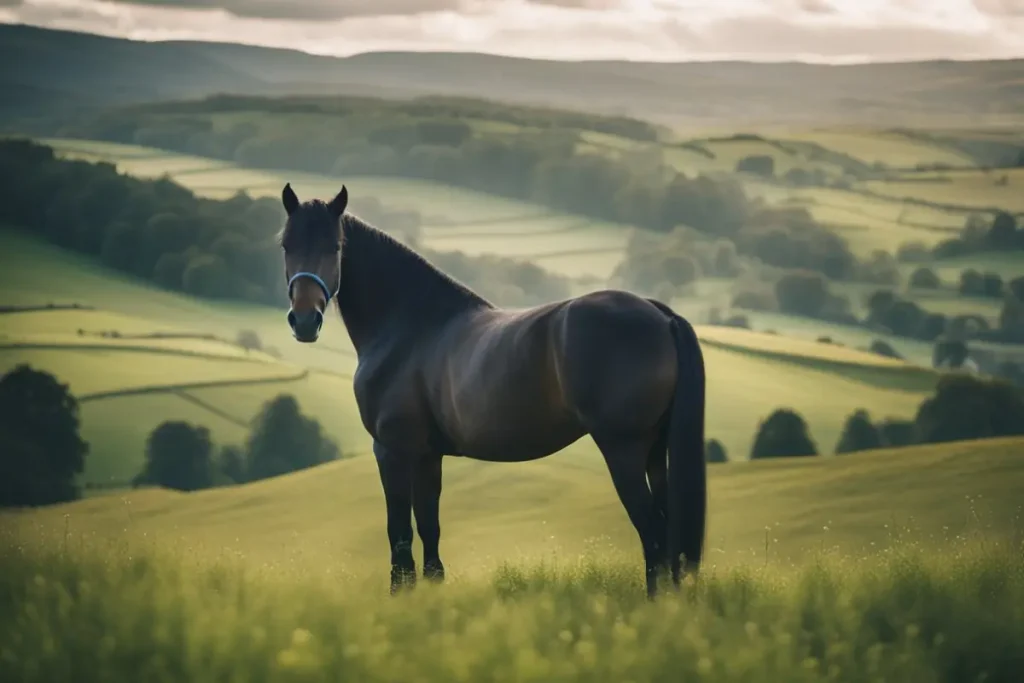
Selecting a Scottish name for a horse involves considering the name’s connotation, meaning, sound, and ease of calling. The right name can reflect the horse’s character and create a connection between the owner and the animal.
Connotation and Meaning
When choosing a name, the connotation and meaning are important. Certain names may evoke specific traits or qualities. For example, names like “Angus” suggest strength, while “Ailsa” reflects confidence.
Owners should explore the cultural significance behind names. This often provides a deeper connection to Scotland’s rich heritage. Researching their meanings can help identify names that resonate personally.
It’s also beneficial to consider how the name reflects the horse’s personality. Does it match their energy level, behavior, or appearance? A well-chosen name can celebrate the horse’s uniqueness while honoring Scottish traditions.
Also, check out 600+ Badass Horse Names for Your Majestic Companion.
Sound and Ease of Calling
The sound of the name is crucial for communication. A name that is easy to call will facilitate a better bond between horse and owner. Short, clear names like “Lachlan” or “Kira” allow for quick recognition.
Consider how the name sounds when calling it aloud. Avoid names that are too long or complex. They may confuse the horse during training or daily interactions.
Using a name that ends with a vowel can also be beneficial. These names tend to be more melodic and easier for horses to recognize. Test the name in different settings to ensure it is functional and effective.
Check out, 400+ Cool & Catchy Black Horse Names (Categorized).
Frequently Asked Questions
Scottish horse names often reflect the culture and history of Scotland. They encompass traditional names, unique suggestions, and influences from mythology. Here are some specific questions regarding Scottish horse names.
What are some traditional Scottish names for male horses?
Traditional Scottish names for male horses include Angus, which means “one strength,” and Brodie, often associated with a strong character. Other names like MacGregor and Fergus also carry historical significance and reflect Scottish heritage.
Can you suggest unique Scottish names suitable for horses?
Unique Scottish names for horses can include Lismore’s Light, which suggests brightness and cheerfulness, and Moray’s Magic, evoking a sense of mystery. These names highlight the diverse character traits that horse owners may want to reflect in their horses’ names.
What are common Scottish names for female horses?
Common names for female horses in Scotland include Shona, meaning “God is gracious,” and Iona, named after a small Scottish island. Names like Isla and Fiona are also popular, often chosen for their lyrical sounds and cultural connections.
Are there any Scottish horse breeds with distinctive naming traditions?
Certain Scottish breeds, like the Highland Pony, are known for names that reflect their rugged nature and origins. Naming traditions for these breeds often draw from geographic locations and unique Scottish features.
How do Scottish horse names differ from Irish horse names?
Scottish horse names tend to emphasize strength and character, while Irish names often focus on nature and folklore. Both naming styles celebrate their rich cultures, but the themes and inspirations can vary significantly.
Which Scottish names for horses are inspired by mythology?
Names like Bran, which means “raven,” and Macha, associated with a goddess in Celtic mythology, are inspired by Scottish folklore. These names often reflect traits linked to mythological figures, enhancing the connection between the horse and Scottish heritage.
FURTHER READING