Native Horse Names 2026 Edition: Meanings, Origins, and Ideas
Finding a Native Horse names 2026 edition list that is actually useful is harder than it should be. Too many name roundups repeat the same entries without tribe context, meaning, or any clue about whether a name fits a mare, stallion, gelding, or a specific personality. This guide fixes that with practical Native American horse names, clear meaning notes, language origin where known, and smart ways to match a name to coat color, temperament, and daily use.
Quick picks
If you want a fast shortlist before diving deeper, these Native American horse names are strong, wearable, and easy to call across a field. Most also work well as a registered name base, with a shorter call name for everyday handling and voice commands.
|
Name |
Meaning |
Language origin or association |
Best fit |
|---|---|---|---|
|
Koda |
Ally |
Commonly linked to Sioux/Dakota use |
Unisex, steady horse |
|
Takoda |
Friend to all |
Sioux/Dakota association |
Gentle gelding, family horse |
|
Tashunka |
Horse or sacred dog |
Lakota |
Stallion, show name |
|
Makwa |
Bear |
Ojibwe |
Powerful build, bold personality |
|
Kangee |
Raven |
Lakota |
Black horse |
|
Enoli |
Black fox |
Cherokee |
Quick, clever horse |
|
Tala |
Wolf |
Widely used in Native-inspired naming lists |
Unisex, alert horse |
|
Chatan |
Hawk |
Sioux association |
Fast, watchful stallion |
|
Winona |
First-born daughter |
Dakota |
Mare |
|
Aiyana |
Eternal blossom |
Widely used Indigenous-name association |
Elegant mare |
|
Kiona |
Brown hills |
Native-inspired usage |
Bay or brown horse |
|
Ohanko |
Reckless wild horse |
Lakota |
Hot-blooded, energetic horse |
Top 25 Horse Names in Native American Languages
| # | Language / Tribe | Horse Name | Meaning |
|---|---|---|---|
| 1 | Salish | stiqíw | Meaning still a mystery |
| 2 | Cree | mistatim | Big dog |
| 3 | Ojibwe | bebezhigooganzhii | Single nail on each foot |
| 4 | Mi’kmaq | tesipou | From French des chevaux (“horses”) |
| 5 | Mohawk | iako hsá:tens | It is ridden |
| 6 | Cayuga | karotanékhuwi | Log-hauler |
| 7 | Shawnee | mishawa | Elk |
| 8 | Illinois | neekatikásia | One-clawed |
| 9 | Cherokee | sogwili | Burden-bearer |
| 10 | Creek | cerakko | Big deer |
| 11 | Choctaw | issoba | Like a deer |
| 12 | Karankawa | kuwuayi | From Spanish caballo (“horse”) |
| 13 | Nahuatl | cahuallo | From Spanish caballo (“horse”) |
| 14 | Keres | kawaayu | From Spanish caballo (“horse”) |
| 15 | Comanche | puuka | Pet; companion animal |
| 16 | Navajo | tłʼiʼiʼ | Dog; pet |
| 17 | Mojave | ahat | Pet |
| 18 | Pomo | kawá:yu | From Spanish caballo (“horse”) |
| 19 | Wiyot | wayits | Dog |
| 20 | Sahaptin | kʼusi | Dog |
| 21 | Arikara | xaawuaríxtiʼ | Sacred dog |
| 22 | Lakota (Sioux) | šunkawakhán | Mystery dog |
| 23 | Northern Cheyenne | moehenoha | Tame elk |
| 24 | Pawnee | arúsa | Dog |
| 25 | Meskwaki | netaya | Dog; pet |
Choosing the right name
The best American Indian horse names are not just meaningful on paper. They also need to sound clean, fit the horse’s identity, and stay practical in the barn, trailer, arena, and show ring.
-
Start with language origin. Lakota, Cherokee, Navajo, Comanche, Apache, Ojibwe, Hopi, and Choctaw are distinct languages and tribes, not interchangeable labels. If you use a tribal name, match it to the correct cultural background.
-
Keep the call name short. One- or two-syllable names carry better across a pasture and are easier to repeat in training. A longer registered name or show name can still be paired with a short daily call name.
-
Match the horse’s personality. A calm gelding may suit Takoda, while an intense, forward stallion may fit Chatan or Makwa better.
-
Use coat color as a filter. Red roans pair well with fire imagery, black horses suit shadow or raven names, and palominos often fit sun and gold references.
-
Say the name out loud. A good horse name should work in voice commands and not sound too much like “whoa,” “easy,” or another stable cue.
-
Check respectful use. If a name is tied to a sacred, spiritual, or historical figure, make sure you understand the meaning before using it casually.
If you want a broader pool before narrowing to Native-inspired picks, scanning other good horse names can help you compare sound, length, and barn usability.
Names by theme
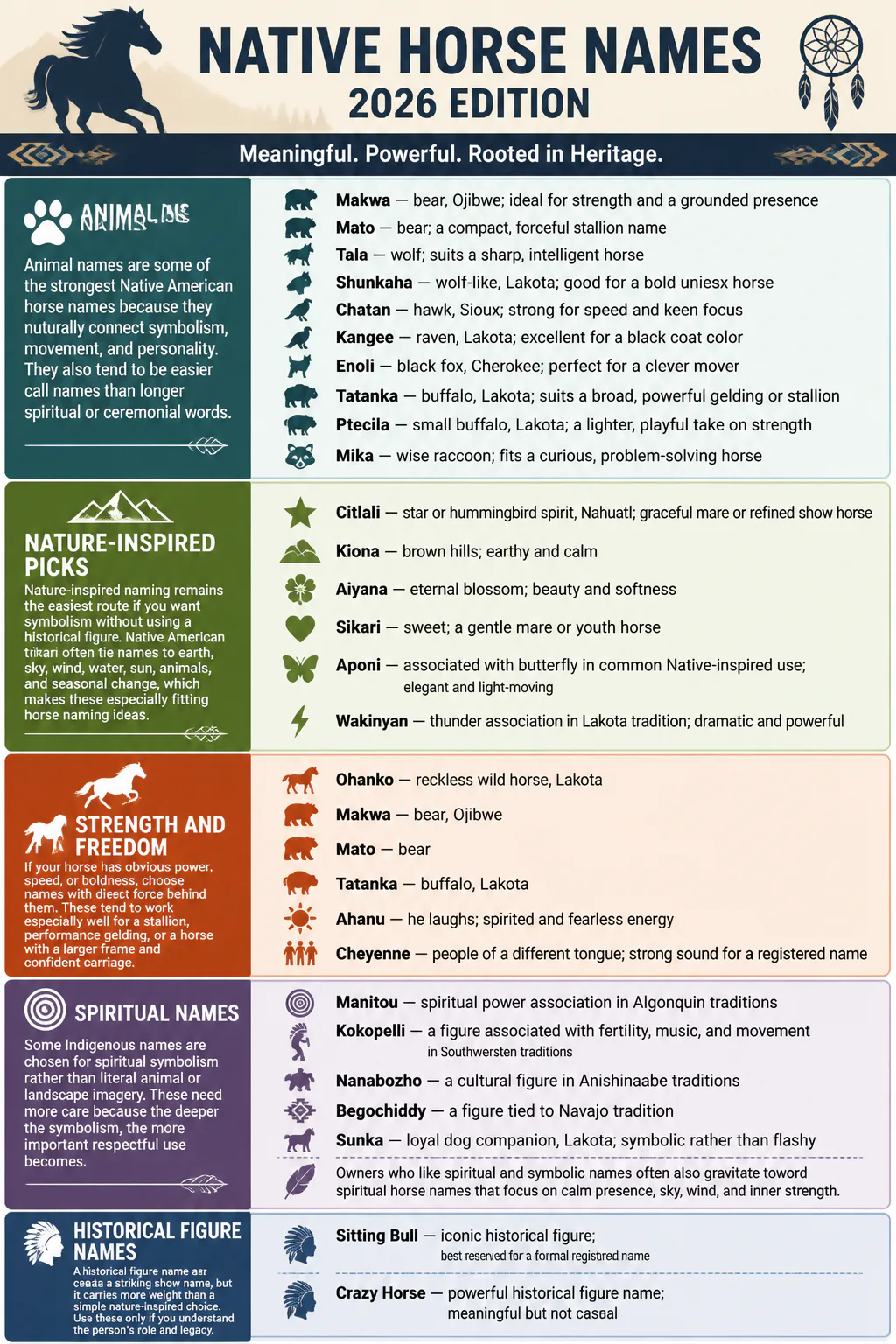
Animal names
Animal names are some of the strongest Native American horse names because they naturally connect symbolism, movement, and personality. They also tend to be easier call names than longer spiritual or ceremonial words.
-
Makwa — bear, Ojibwe; ideal for strength and a grounded presence
-
Mato — bear; a compact, forceful stallion name
-
Tala — wolf; suits a sharp, intelligent horse
-
Shunkaha — wolf-like, Lakota; good for a bold unisex horse
-
Chatan — hawk, Sioux; strong for speed and keen focus
-
Kangee — raven, Lakota; excellent for a black coat color
-
Enoli — black fox, Cherokee; perfect for a clever mover
-
Tatanka — buffalo, Lakota; suits a broad, powerful gelding or stallion
-
Ptecila — small buffalo, Lakota; a lighter, playful take on strength
-
Mika — wise raccoon; fits a curious, problem-solving horse
Nature-inspired picks
Nature-inspired naming remains the easiest route if you want symbolism without using a historical figure. Native American tribes often tie names to earth, sky, wind, water, sun, animals, and seasonal change, which makes these especially fitting horse naming ideas.
-
Citlali — star or hummingbird spirit, Nahuatl; graceful mare or refined show horse
-
Kiona — brown hills; earthy and calm
-
Aiyana — eternal blossom; beauty and softness
-
Sakari — sweet; a gentle mare or youth horse
-
Aponi — associated with butterfly in common Native-inspired use; elegant and light-moving
-
Wakinyan — thunder association in Lakota tradition; dramatic and powerful
Strength and freedom
If your horse has obvious power, speed, or boldness, choose names with direct force behind them. These tend to work especially well for a stallion, performance gelding, or a horse with a larger frame and confident carriage.
-
Ohanko — reckless wild horse, Lakota
-
Makwa — bear, Ojibwe
-
Mato — bear
-
Tatanka — buffalo, Lakota
-
Ahanu — he laughs; spirited and fearless energy
-
Cheyenne — people of a different tongue; strong sound for a registered name
Spiritual names
Some Indigenous names are chosen for spiritual symbolism rather than literal animal or landscape imagery. These need more care because the deeper the symbolism, the more important respectful use becomes.
-
Manitou — spiritual power association in Algonquin traditions
-
Kokopelli — a figure associated with fertility, music, and movement in Southwestern traditions
-
Nanabozho — a cultural figure in Anishinaabe traditions
-
Begochiddy — a figure tied to Navajo tradition
-
Sunka — loyal dog companion, Lakota; symbolic rather than flashy
Owners who like spiritual and symbolic names often also gravitate toward spiritual horse names that focus on calm presence, sky, wind, and inner strength.
Historical figure names
A historical figure name can create a striking show name, but it carries more weight than a simple nature-inspired choice. Use these only if you understand the person’s role and legacy.
-
Sitting Bull — iconic historical figure; best reserved for a formal registered name
-
Crazy Horse — powerful historical figure name; meaningful but not casual
By gender and temperament
Mare names
-
Winona — first-born daughter
-
Aiyana — eternal blossom
-
Sakari — sweet
-
Kaya — elder sister
-
Citlali — star or hummingbird spirit
-
Aponi — butterfly association
Stallion names
-
Tashunka — horse or sacred dog
-
Makwa — bear
-
Chatan — hawk
-
Tatanka — buffalo
-
Mato — bear
-
Ohanko — reckless wild horse
Gelding names
-
Takoda — friend to all
-
Koda — ally
-
Sunka — loyal companion
-
Mika — wise raccoon
-
Kiona — brown hills
Unisex options
Unisex names work well if you want flexibility, especially for a younger horse before a stronger personality shows up. They also fit owners who care more about symbolism than a strict mare or stallion label.
-
Koda
-
Takoda
-
Tala
-
Kiona
-
Makwa
-
Chatan
Calm or spirited
|
Temperament |
Better name styles |
Examples |
|---|---|---|
|
Calm, dependable |
Soft consonants, friendly meaning |
Koda, Takoda, Sakari, Kiona |
|
Fast, hot, reactive |
Sharp sounds, sky or predator imagery |
Chatan, Kangee, Ohanko, Tala |
|
Strong, steady |
Animal symbolism tied to strength |
Makwa, Mato, Tatanka |
|
Elegant, graceful |
Nature-inspired and spiritual meanings |
Aiyana, Citlali, Aponi |
Coat color matches
Coat color is not everything, but it is a useful final filter once you have a shortlist. It helps the name feel visually right from the first introduction.
-
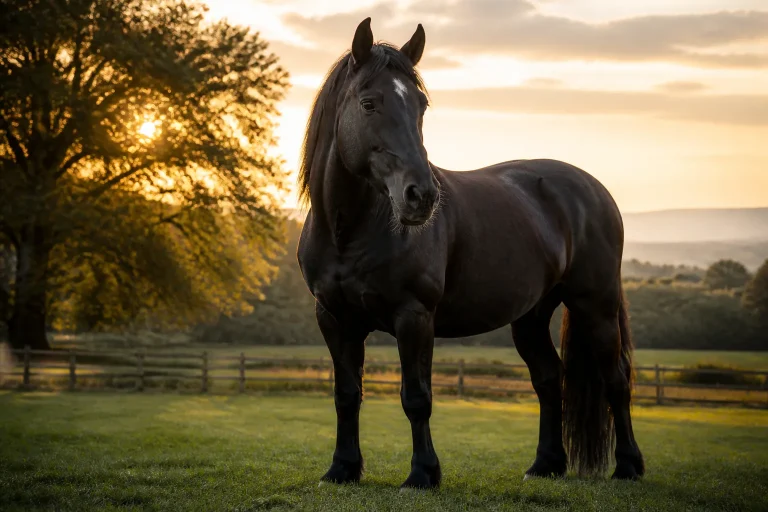
Black horse: Kangee, Enoli, Tala
-
Palomino: names linked to sun, gold, sky, or brightness such as Citlali
-
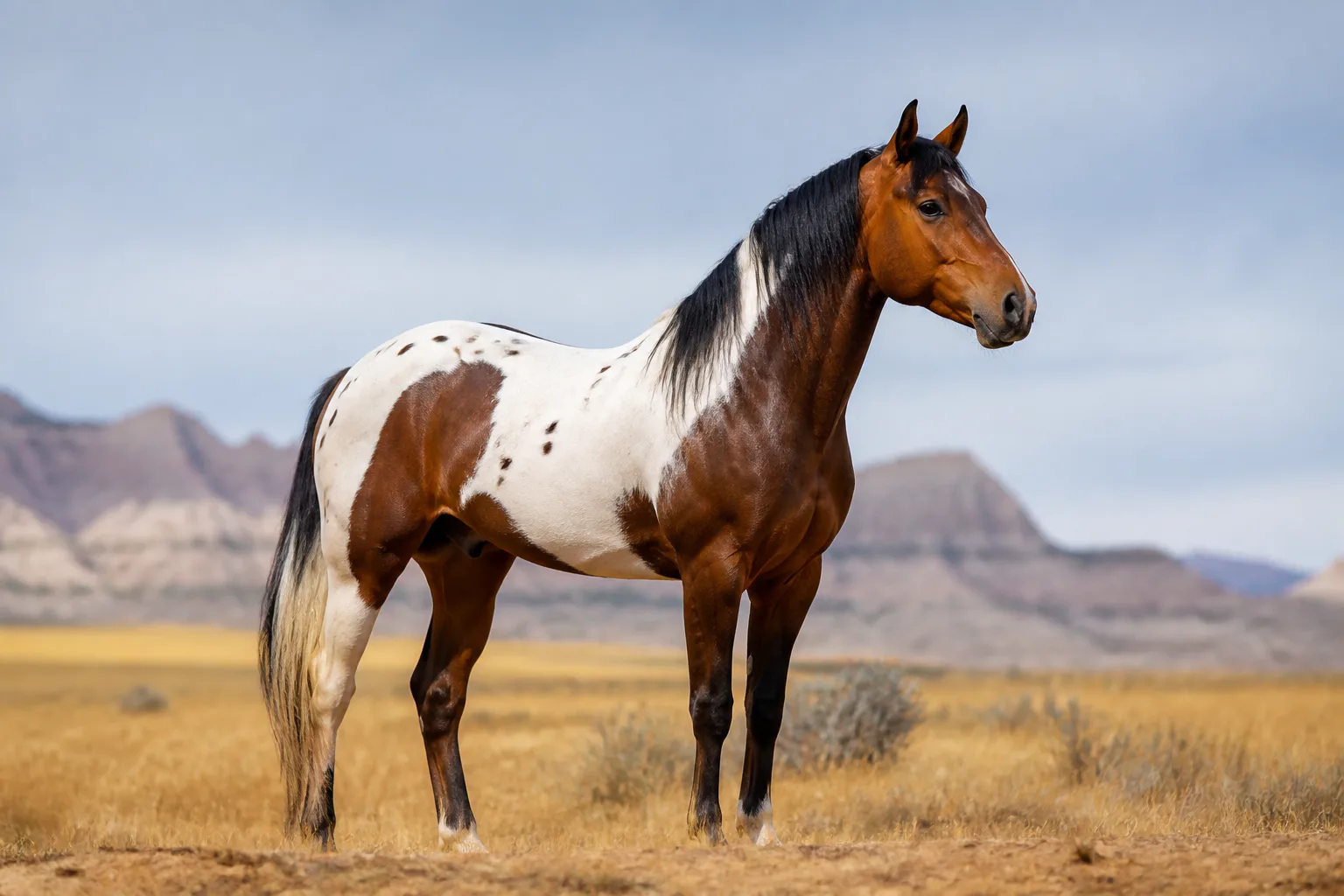
Red roan: names tied to fire, boldness, or storm energy such as Wakinyan or Ohanko
-
Bay or brown: Kiona, Makwa, Mato
-
Gray: sky, wind, or spiritual symbolism often works better than earth-heavy names
A black-coated horse often benefits from darker imagery, and you can compare Native-inspired options with other black horse names if you want something that still feels sleek and memorable.
Respectful use
Respectful use matters more here than with most other naming categories. Native American horse names are not one blended style, because each tribe has its own language origin, sound system, beliefs, and naming traditions.
-
Do not treat Lakota, Sioux, Cherokee, Navajo, Apache, Comanche, Hopi, Ojibwe, Cree, or Choctaw names as interchangeable.
-
Prefer names whose meaning you understand clearly.
-
Be cautious with sacred, ceremonial, spiritual, or historical figure names.
-
Avoid stereotypes, tokenism, and made-up “tribal” spellings.
-
If pronunciation feels impossible in daily use, choose a simpler call name and save the fuller version for a registered name.
One useful language note: in Lakota, sun’ka wakan is commonly glossed as “holy dog,” reflecting how horses were understood after their introduction and eventual importance in Native life. That history is part of why horses, names, and symbolism are so closely linked in many naming traditions today.
100 name ideas
Use this larger list if you want more variety across nature-inspired, animal names, spiritual symbolism, and everyday barn-friendly options. Some are direct Native names with horse name meanings, while others are respectful Native-inspired choices built around common themes such as earth, wind, water, beauty, grace, speed, strength, freedom, bear, wolf, falcon, fox, and butterfly.
-
Koda
-
Takoda
-
Tashunka
-
Sunka
-
Makwa
-
Mato
-
Tatanka
-
Ptecila
-
Chatan
-
Kangee
-
Enoli
-
Tala
-
Shunkaha
-
Ohanko
-
Winona
-
Aiyana
-
Sakari
-
Kaya
-
Kiona
-
Ahanu
-
Mika
-
Citlali
-
Aponi
-
Dakota
-
Cheyenne
-
Honiahaka
-
Wakinyan
-
Manitou
-
Kokopelli
-
Nanabozho
-
Begochiddy
-
Hok’ee
-
Nita
-
Yuma
-
Zaltana
-
Adsila
-
Adawehi
-
Isi
-
Ohanzee
-
Pamuy
-
Suni
-
Tiva
-
Nodin
-
Wapi
-
Yoki
-
Dasan
-
Helki
-
Honovi
-
Keme
-
Muna
-
Nashoba
-
Niya
-
Odina
-
Peta
-
Sahale
-
Tivaan
-
Wyanet
-
Yansa
-
Zonta
-
Atohi
-
Bidziil
-
Chapa
-
Elsu
-
Hinto
-
Kele
-
Kuruk
-
Luyu
-
Mahpee
-
Nokosi
-
Pazi
-
Quanah
-
Sapa
-
Tasunke
-
Tayani
-
Wapiya
-
Yutu
-
Zitkaduta
-
Awena
-
Dyami
-
Hania
-
Istas
-
Kimi
-
Lomasi
-
Maiyun
-
Nova
-
Onatah
-
Pavati
-
Salali
-
Taini
-
Una
-
Woya
-
Yokiya
-
Zia
-
Coyote
-
Falcon
-
Fox
-
Butterfly
-
Sky
-
Wind
-
Water
-
Earth
Native American / Indigenous-associated horse breeds
|
Breed |
Region / Indigenous connection |
|---|---|
|
Appaloosa |
Pacific Northwest — strongly associated with the Nez Perce (Nimíipuu) |
|
Nez Perce Horse |
Pacific Northwest — developed by the Nez Perce |
|
Choctaw Horse |
Southeastern U.S. — Choctaw |
|
Florida Cracker Horse |
Florida — associated with Florida’s early Spanish/Indigenous horse culture |
|
Marsh Tacky |
South Carolina — developed in the Lowcountry, with strong Gullah/colonial and Indigenous heritage |
|
Nokota Horse |
North Dakota — descended partly from horses associated with Native peoples |
|
Lac La Croix Indian Pony |
Ontario, Canada — associated with the Ojibwe |
|
American Indian Horse |
Broad registry category covering horses of Native American heritage |
|
Spanish Mustang |
Western U.S. — Spanish Colonial ancestry and extensive Native American history |
|
Cayuse |
Pacific Northwest — historically associated with the Cayuse people; often used broadly for Native/Indian horses |
|
Southeastern Horse |
Southeastern U.S. — includes historic Choctaw, Cherokee, Chickasaw and Creek strains |
|
American Quarter Horse |
Developed from multiple sources, including horses bred by Native peoples such as the Chickasaw; not itself a purely Indigenous breed |
The National Museum of the American Indian specifically identifies the Appaloosa, Southeastern horses, and American Quarter Horse among breeds descended from or strongly connected to Native American horse breeding.
10 culturally/language-associated name ideas with meanings
1. Appaloosa — Nez Perce
The Appaloosa has a particularly strong connection to the Nimíipuu (Nez Perce), who selectively bred horses. PBS documents the Nez Perce use of names such as See-uk-its, meaning “beautiful.”
|
# |
Name |
Meaning |
|---|---|---|
|
1 |
See-uk-its |
Beautiful |
|
2 |
Wíiyakȟa |
Decorative / adorned |
|
3 |
WíyakA |
Feather |
|
4 |
Tȟáŋka |
Big / great |
|
5 |
WíyakA Tȟáŋka |
Great feather |
|
6 |
WíyakA Wakan |
Sacred/holy feather |
|
7 |
Chumani |
Dewdrops |
|
8 |
WíyakA |
Feather |
|
9 |
WíyakA Wakan |
Sacred feather |
|
10 |
Wi’Cesa |
Born and reborn |
Best Appaloosa names: See-uk-its, Wi’Cesa, Wíiyakȟa
2. Nez Perce Horse
For the Nez Perce Horse, I’d keep the naming theme closely connected to the Nimíipuu and the qualities traditionally valued in horses.
|
# |
Name |
Meaning |
|---|---|---|
|
1 |
Wi’Cesa |
Born and reborn |
|
2 |
See-uk-its |
Beautiful |
|
3 |
Tȟáŋka |
Great / big |
|
4 |
Wíyakȟa |
Decorative / adorned |
|
5 |
Chumani |
Dewdrops |
|
6 |
WíyakA Wakan |
Sacred feather |
|
7 |
WíyakA Tȟáŋka |
Great feather |
|
8 |
WíyakA |
Feather |
|
9 |
Wakan |
Sacred / holy |
|
10 |
Tȟáŋka Wakan |
Great and sacred |
3. Choctaw Horse
This one is especially interesting because the Choctaw Nation itself provides language-learning material. For example, issuba means “horse,” while issi means deer, nita bear, oka water, and mahli wind.
|
# |
Name |
Meaning |
|---|---|---|
|
1 |
Issuba |
Horse |
|
2 |
Nita |
Bear |
|
3 |
Issi |
Deer |
|
4 |
Oka |
Water |
|
5 |
Mahli |
Wind |
|
6 |
Chukfi |
Rabbit |
|
7 |
Sinti |
Snake |
|
8 |
Luksi |
Turtle |
|
9 |
Iti |
Tree |
|
10 |
Wak |
Cow |
Best Choctaw horse names: Issuba, Mahli, Oka, Nita
These are particularly good choices because the meanings can be verified through Choctaw Nation educational material rather than relying on generic “Native American name” websites.
4. Lac La Croix / Ojibwe Horse
The Ojibwe Horse, also known as the Lac La Croix Indigenous Pony, was developed by the Ojibwe people and is a distinct Indigenous Canadian breed.
|
# |
Name |
Meaning |
|---|---|---|
|
1 |
Aki |
Earth / land |
|
2 |
Nibi |
Water |
|
3 |
Binesi |
Thunderbird |
|
4 |
Makwa |
Bear |
|
5 |
Migizi |
Eagle |
|
6 |
Waabishki |
White |
|
7 |
Misko |
Red |
|
8 |
Misko-Makwa |
Red bear |
|
9 |
Nokomis |
Grandmother |
|
10 |
Gijigad |
Day |
The breed’s history is particularly significant: only four mares remained in 1977, and they were rescued to preserve the breed.
5. Nokota Horse
The Nokota has a strong connection to the history of North Dakota and the horses associated with the region’s Native peoples. For naming, Lakota/Dakota-inspired names fit the historical setting better than generic “Native American” names.
|
# |
Name |
Meaning |
|---|---|---|
|
1 |
Tȟáŋka |
Great / big |
|
2 |
Wíyakȟa |
Feather |
|
3 |
WíyakA Wakan |
Sacred feather |
|
4 |
Chumani |
Dewdrops |
|
5 |
WíyakA |
Feather |
|
6 |
Wakan |
Sacred |
|
7 |
Hanska |
Tall |
|
8 |
Eyota |
Great |
|
9 |
Maka |
Earth |
|
10 |
Wíyakȟa Tȟáŋka |
Great feather |
Best Nokota names: Tȟáŋka, Wakan, Maka, Hanska
6. Cayuse
“Cayuse” is actually a complicated term. It originally referred to horses associated with the Cayuse people of the Pacific Northwest, but later became a broader Western term for a small horse.
For a Cayuse-themed horse:
|
# |
Name |
Meaning |
|---|---|---|
|
1 |
Sinopa |
Fox cub |
|
2 |
Kawáyu |
Horse |
|
3 |
Hanska |
Tall |
|
4 |
Chumani |
Dewdrops |
|
5 |
Maka |
Earth |
|
6 |
Wíyakȟa |
Feather |
|
7 |
Eyota |
Great |
|
8 |
Wakan |
Sacred |
|
9 |
Kitchi |
Brave |
|
10 |
Takoda |
Friend to everyone |
Best Cayuse names: Sinopa, Kawáyu, Takoda, Wakan
7. Colorado Ranger
The Colorado Ranger isn’t an Indigenous-developed breed, so I wouldn’t claim these are traditional Colorado Ranger names.
But if you’re looking for names suitable for the breed’s Western/Native-American aesthetic:
|
# |
Name |
Meaning |
|---|---|---|
|
1 |
Takoda |
Friend to everyone |
|
2 |
Wakan |
Sacred |
|
3 |
Maka |
Earth |
|
4 |
Hanska |
Tall |
|
5 |
Eyota |
Great |
|
6 |
Kitchi |
Brave |
|
7 |
Chumani |
Dewdrops |
|
8 |
Wíyakȟa |
Feather |
|
9 |
Nokose |
Bear |
|
10 |
Maikoh |
Wolf |
8. Cumberland Island Horse
Like the Colorado Ranger, I would not describe these as traditional Cumberland Island horse names. They’re horse-name ideas inspired by Indigenous languages and the natural environment of North America.
|
# |
Name |
Meaning |
|---|---|---|
|
1 |
Oka |
Water |
|
2 |
Mahli |
Wind |
|
3 |
Maka |
Earth |
|
4 |
Chumani |
Dewdrops |
|
5 |
Nita |
Bear |
|
6 |
Maikoh |
Wolf |
|
7 |
Aponi |
Butterfly |
|
8 |
Yoki |
Rain |
|
9 |
Sihu |
Flower |
|
10 |
Wíyakȟa |
Feather |
9. Moyle Horse
The Moyle is another breed for which I wouldn’t claim these are historical Indigenous names. For a Western/Native-inspired naming style:
|
# |
Name |
Meaning |
|---|---|---|
|
1 |
Tȟáŋka |
Great / big |
|
2 |
Takoda |
Friend to everyone |
|
3 |
Wakan |
Sacred |
|
4 |
Hanska |
Tall |
|
5 |
Eyota |
Great |
|
6 |
Maka |
Earth |
|
7 |
Kitchi |
Brave |
|
8 |
Nokose |
Bear |
|
9 |
Maikoh |
Wolf |
|
10 |
Chumani |
Dewdrops |
FAQ
What are good Native American horse names?
Good choices include Koda, Takoda, Makwa, Tala, Chatan, Kangee, Winona, Aiyana, Enoli, and Tashunka. They are memorable, have recognizable horse name meanings, and fit different personalities and coat color types.
What makes a good horse call name?
A good call name is short, clear, and easy to repeat. One or two syllables usually work best for training, turnout, and voice commands, while a longer registered name can be saved for paperwork or the show ring.
Are Native-inspired horse names unisex?
Many are. Koda, Takoda, Tala, Kiona, and Makwa all work as unisex names depending on the horse’s look and personality.
Should I use a historical figure name?
Only if you understand the person’s cultural importance. A historical figure name such as Sitting Bull or Crazy Horse carries more weight than a simple animal or nature-inspired option.
How do I match a name to coat color?
Use dark bird or shadow imagery for black horses, sun or gold references for palominos, earthy names for bays, and fire or storm energy for red roans. Then test whether the name still fits the horse’s personality, not just the color.
Are all tribal names basically the same style?
No. A tribe name or language origin matters. Lakota, Sioux, Cherokee, Choctaw, Hopi, Ojibwe, Navajo, Arapaho, Algonquin, Miwok, Dakota, Blackfoot, Cheyenne, Comanche, Apache, Shoshone, Inuit, Potawatomi, Seminole, Maya, Mapuche, Powhatan, Cree, Zuni, Omaha, Chemehuevi, Pomo, Huron, Mohawk, Wabanaki, and Penobscot all represent distinct peoples and traditions.
Final pick advice
Choose the name you can say easily, explain honestly, and still love six months from now. For most owners, the safest formula is a short unisex or animal-based name with a clear meaning, a known language origin, and a separate show name if you want something longer or more dramatic.